
Commission for Communications Regulation – Public Consultation – ComReg 22/109b
Public Consultation on ComReg’s Draft Electronic Communication Network and Services (ECN and ECS) Strategy Statement 2023-2025.
Submitted: 9th February, 2023
Commission for Communications Regulation – Public Consultation – ComReg 22/109b
Public Consultation on ComReg’s Draft Electronic Communication Network and Services (ECN and ECS) Strategy Statement 2023-2025.
Submitted: 9th February, 2023
New study by Dr Lennart Hardell and Mona Nilsson from the Radiation Protection Foundation.
Published 10th January 2023
Conclusions:
‘5G is being rolled out without any studies showing that 5G is safe for humans and wildlife. To our knowledge, this is the first study of health outcomes in persons exposed to 5G RF radiation. Within a couple of days, a new 5G base station caused severe symptoms in two previously healthy persons that correspond to the microwave syndrome. The deployment of 5G also caused a dramatic increase in maximum (peak) microwave radiation exposure, from 9 000 µW/m2 to >2 500 000µW/m2 . The symptoms quickly reversed when the couple moved to a dwelling with much lower exposure. This case is in line with scientific findings reported already 50 years ago on effects of exposure to microwave radiation and that most symptoms disappear when the exposure is discontinued. This study and previous studies show that the microwave syndrome appears at levels well below the current limits recommended by the ICNIRP.”
The 7th Appeal to the EU, signed by more than 400 scientists and doctors, asking that the exposure limits guidelines set by ICNIRP be reduced dramatically to protect the health of all living things and a moratorium on 5G be established.
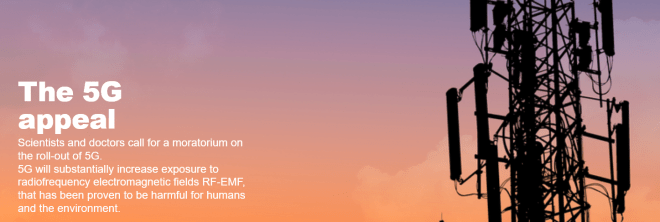
EXCERPT:
To the EU Legislative bodies 12 January 2023
The EU’s illegal precedence of economy over health
On behalf of over 400 scientists and MDs, we are sending the 5G appeal to the EU for the 7th time since 2017. We expect that EU decision makers will take the 5G Appeal and thousands of relevant scientific articles as indicative of what is now known about the harmful and energy wasting effects of wireless electromagnetic fields (EMF) and all forms of Non-Ionising Radiation (NIR). We expect the EU to take appropriate measures to protect EU citizens from these effects. We request a meeting with,as well as a direct, written response from the EU commissioners of Health, Environment and Competition and members of the Council of the Ministers
1. The Charter of Fundamental Rights , primary law as well as case law from the European Court of Justice make it mandatory for EU decision-makers to protect the EU population, especially children, from all kinds of harmful health effects of wireless technology. Article 168 of the consolidated version of the Treaty on the Functioning of the European Union (TFEU) reads as follows: A high level of human health protection shall be ensured in the definition and implementation of all Union policies and activities. EU Case law clearly states that: The protection of health takes precedence over economic considerations. We therefore expect protection of health to be the primary principle adopted by all decision-makers in the EU, including European commissioners, members of the European Parliament and the Council of Ministers.
2. Since 2017 we have not seen any proof of this . In the six replies we have received to earlier 5G Appeals there has not been any clear intention to prioritise health over economics. Instead, the EU continues to advocate the economic benefits of wireless (5G) communications more than health and to consider the inadequate ICNIRP guidelines as protective of human and environmental health, including for children and the most vulnerable. The history of EU responses to consecutive 5G Appeals demonstrating an ongoing lack of attention to health concerns has been published in a recent review.
3. The EU continues to refer to the ICNIRP guidelines because ICNIRP has been endorsed by Council Recommendation 1999/519/EC as the EU’s main external advisory group concerning NIR protection. Even in the face of thousands of studies stating the contrary, ICNIRP and Council Recommendation 1999/519/EC continue to deny that there is scientific proof of non-thermal, biological effects far below current policy radiation guidelines. Given the state of play of independent science today, there are increasing questions concerning the continued legality of Council Recommendation 1999/519/EC and the EU EMF-health protection policy in general.
ICNIRP Guidelines are a grossly inadequate basis for EU policy in general.
4. There is now clear evidence that ICNIRP guidelines are not an adequate scientific basis for EU’s policy regarding wireless electromagnetic fields (EMF) policy. ICNIRP guidelines have been shown to be flawed by, amongst others, Cherry , Favre , Hansson Mild & Hardell , ORSAA , Redmayne , Nordhagen & Flydal and recently the ICBE-EMF . On top of this, 256 Scientists in the EMF Scientists Appeal attest that ICNIRP guidelines do not protect health. Over 400 scientists and medical doctors have endorsed the 5G Appeal. All have asked the EU to apply the Precautionary Principle in such a way that EU policy takes not only heating (thermal) but also non-thermal effects into account. This is increasingly supported by a number of successful lawsuits in USA , Germany , Italy and elsewhere in the European Union, demonstrating that signals from mobile communications are seen to be the cause of several kinds of harmful effects such as acoustic neuroma (brain cancer) in people exposed to cell phones. The environment, including plants, trees, bees, insects, birds, mammals, rats and cows are also harmed by NIR far below the ICNIRP guidelines. Therefore, NIR poses a serious threat to not just humans, but also to the environment and to everything that lives. …
READ AND SHARE THE FULL APPEAL HERE 5G – 7th EU 5G Appeal 12 Jan 2023 – illegal precedence of economy over health – nyberg, hardell-1 pdf
Oceania Radio frequency Scientific Advisory Association – ORSAA
Presentation Mullumbimby NSW. 4th August 2018
Published:
EXTRACT:
Scientific Reports volume 12, Article number: 21923 (2022) Piras, C., Pibiri, M., Conte, S. et al. Metabolomics analysis of plasma samples of patients with fibromyalgia and electromagnetic sensitivity using GC–MS technique. Sci Rep 12, 21923 (2022). https://doi.org/10.1038/s41598-022-25588-2
Fibromyalgia (FM) is a chronic and systemic condition that causes widespread chronic pain, asthenia, and muscle stiffness, as well as in some cases depression, anxiety, and disorders of the autonomic system. The exact causes that lead to the development of FM are still unknown today. In a percentage of individuals, the symptoms of FM are often triggered and/or exacerbated by proximity to electrical and electromagnetic devices. Plasma metabolomic profile of 54 patients with fibromyalgia and self-reported electromagnetic sensitivity (IEI-EMF) were compared to 23 healthy subjects using gas chromatography-mass spectrometry (GC–MS) coupled with multivariate statistical analysis techniques. Before the GC–MS analysis the plasma samples were extracted with a modified Folch method and then derivatized with methoxamine hydrochloride in pyridine solution and N-trimethylsilyltrifuoroacetamide. The combined analysis allowed to identify a metabolomic profile able of distinguishing IEI-EMF patients and healthy subjects. IEI-EMF patients were therefore characterized by the alteration of 19 metabolites involved in different metabolic pathways such as energy metabolism, muscle, and pathways related to oxidative stress defense and chronic pain. The results obtained in this study complete the metabolomic “picture” previously investigated on the same cohort of IEI-EMF patients with 1H-NMR spectroscopy, placing a further piece for better understanding the pathophysiological mechanisms in patients with IEI-EMF.
Fibromyalgia (FM) is a condition characterized by a constellation of symptoms, including chronic pain, depression, anxiety, autonomic disturbance, fatigue, and memory and sleep dysfunction1. These numerous symptoms of functional and emotional origin seriously compromise the life quality of patients making the treatment harder and difficult2. At present, FM patients are diagnosed using the 2016 revised FM criteria3 based on the Fibromyalgia Research guideline4. According to these revised diagnostic criteria, fibromyalgia may be diagnosed in adults based on: (1) presence of generalized pain, defined as pain in at least 4 of 5 regions, (2) presence of symptoms of similar intensity level for at least 3 months, (3) widespread pain index (WPI) ≥ 7 and symptom severity scale (SSS) score ≥ 5 or WPI of 4–6 and SSS score ≥ 9; in addition, (4) a diagnosis of fibromyalgia does not exclude the presence of other clinical important illness3. However, the key causalfactors/mechanisms involved in FM development have not been identified yet5 and the lack of objective parameters to diagnose the pathology renders the discovery of more effective and safer diagnostic biomarkers urgently needed. Sometimes, FM is associated to electrosensitivity (EHS)6. EHS is described as a multi-organ adverse reaction to electromagnetic field (EMF), characterized by a wide range of unspecific symptoms. They can vary with intensity and duration and are experienced as a result of exposure in the workplace or home to EMF emitted by various sources, whether low or high frequency. Since the 60s, in countries of East Europe, there were reports of a new workplace disease defined as “microwave sickness”7: these cases involved thousands of workers in the manufacture, inspection, repair, and maintenance of microwave equipment such as radars and radio/TV stations. These reports have been extended to mobile phones in the last forty years. Researchers generally outline three characteristic syndromes: 1) neurological and/or asthenic: heaviness of head, fatigue, irritability, sleepiness, memory loss, and electroencephalography changes; 2) autonomic vascular changes: sweating, dermographism, blood pressure changes; 3) cardiac: heart pains and electrocardiography changes. Notably, workers exposed for periods above five years exhibited greater symptomatology. In addition, ceasing work was found to bring about a stabilization or improvement of symptoms7. The prevalence of EHS may continue to rise in the future, coinciding with the increasing exposure to local and global wireless networks. This could lead to an increased interest in the scientific community for the discovery of specific biomarkers. To better understand the pathogenesis of FM and EHS and to identify disease-specific biomarkers, we recently have compared the metabolomic profile between patients with FM and Idiopathic environmental intolerance attributed to electromagnetic field (IEI-EMF)8 and healthy subject (controls) by using 1H-NMR spectroscopy and multivariate statistical analysis. Self-reported IEI-EMF patients are subjects characterized by the amplification of fibromyalgia symptomatology in association with the proximity of EMF source exposure9.
Data obtained have shown a different plasma metabolomics profile between IEI-EMF and control subjects with the first being characterized by higher levels of metabolites mainly involved in oxidative stress defense, pain development and muscle metabolism. To better define and characterize the physiopathological mechanisms associated to the IEI-EMF, in the present study we have compared the plasma metabolomics profile of same IEI-EMF patients and control subjects studied by Piras et al.8 by using the mass spectrometry gas chromatography (GC–MS) analysis. GC–MS is a highly sensitivity technique that allows detection of many metabolites in complex biological samples. GC–MS and 1H-NMR provide complementary information about different metabolites, so that the integration of both techniques can be a major advantage to obtain a more holistic view of the metabolome10.
Patients had to fill in a questionnaire and the psychological tests according to the European EMF 2016 Guideline11.
In addition to the tests previously administered to IEI-EMF patients8, the PAI test allowed to evaluate further clinical and psychological characteristics such as: anxiety, depression, related anxiety disorders (like obsessive–compulsive disorders (OCD), phobias, etc.) and emotional instability. No differences between groups for clinical variables (e.g., depression, anxiety, anxiety correlates and emotional instability) were observed (p ≤ 0.05) and all subjects were located under the clinical cut-off (Supplementary Table S1 a) and b)).
Principal Component Analysis (PCA) was then carried out to visualize the global distribution of samples and to highlight possible outliers. None of the samples had to be removed as outliers. Additionally, the quality control (QC), featuring a mix of all samples, was positioned in the middle of the PCA scatter plot indicating a reliable performance and reproducible of the GC–MS analysis (Figure S1).
A supervised OPLS-DA analysis was subsequently conducted on the same dataset. OPLS-DA scores plot showed a clear separation based on the metabolomics profile between IEI-EMF subjects and controls (Fig. 1a). The optimum OPLS-DA model was established with two predictive components and one orthogonal component, with R2X(cum) of 0.456, R2Y(cum) of 0.825 and Q2 of 0.614. The validity of the OPLS-DA model was evaluated through a permutation test (Fig. 1b) using 500 cross validations.
……
READ FULL PAPER HERE https://www.nature.com/articles/s41598-022-25588-2#citeas
 Julie E. McCredden1,
  Naomi Cook1, Steven Weller1,2 and
  Victor Leach1*
Electromagnetic signals from everyday wireless technologies are an ever-present environmental stressor, affecting biological systems. In this article, we substantiate this statement based on the weight of evidence from papers collated within the ORSAA database (ODEB), focusing on the biological and health effects of electromagnetic fields and radiation. More specifically, the experiments investigating exposures from real-world devices and the epidemiology studies examining the effects of living near mobile phone base stations were extracted from ODEB and the number of papers showing effects was compared with the number showing no effects. The results showed that two-thirds of the experimental and epidemiological papers found significant biological effects. The breadth of biological and health categories where effects have been found was subsequently explored, revealing hundreds of papers showing fundamental biological processes that are impacted, such as protein damage, biochemical changes and oxidative stress. This understanding is targeted toward health professionals and policy makers who have not been exposed to this issue during training. To inform this readership, some of the major biological effect categories and plausible mechanisms of action from the reviewed literature are described. Also presented are a set of best practice guidelines for treating patients affected by electromagnetic exposures and for using technology safely in health care settings. In conclusion, there is an extensive evidence base revealing that significant stress to human biological systems is being imposed by exposure to everyday wireless communication devices and supporting infrastructure. This evidence is compelling enough to warrant an update in medical education and practice.
Environmental illness often comes as a surprise to scientists and doctors alike. Environmental causes for human maladies are not always featured in formal training, yet they have accompanied many man-made innovations, from perfume and paint to petrol and plastics (1). It should not be surprising then that the modern world, saturated with technology, would impose effects on human biological systems, which are built from electrochemical processes. Electromagnetic fields and electromagnetic radiation, both natural and manmade, permeate the modern world. In particular, communications technology has become ubiquitous, with devices and transmitters placed in workplaces, homes, schools, hospitals and surrounding suburbs. The frequencies for relaying communications signals are collectively referred to as “radiofrequency” (RF). Examples of everyday technologies that use radiofrequencies include Wi-Fi routers, mobile phones, cordless phones, suburban towers, masts and panels on buildings (including hospitals), Bluetooth devices, smart meters, Fitbits, smart watches, baby monitors, game consoles and smart diapers (nappies).
The evidence base regarding the effects of ever-present electromagnetic pollution on health indicates that it acts like a stressor, placing an increasing burden on human biological systems (2, 3). However, while there have been some positive shifts in recent WHO Health topics, incorporating the effects of water and air pollution, endocrine disrupters, mercury and climate change, there has been very little focus on investigating electromagnetic pollution as an environmental stressor (4).
While much of the medical world remains ignorant regarding this environmental stressor, patients suffer (5). Such has been the clinical experience of one of the authors of this paper. People with hypersensitivity to electromagnetic fields may present to hospitals or clinics with an array of complaints that may or may not be based on their underlying condition, e.g., a bone fracture or a heart condition. While waiting, or during treatment, they may ask to be separated from mobile or cordless phones. Health care workers, not having heard of the condition of electromagnetic hypersensitivity or not having an understanding of the biological effects that are associated with electromagnetic fields, can find such requests strange or confusing and are unable to respond appropriately (6). This unmet need in care settings has motivated this paper, aimed at assisting the broader health profession with an understanding of how electromagnetic fields can affect human biology and providing guidance on how to respond to electrosensitive patients.
There also exists a level of ignorance surrounding this issue across the radiation protection profession. As a retired radiation protection practitioner, one of the authors of this paper has firsthand experience of how the busy daily working life in radiation protection involves a narrow focus on sources of ionizing radiation, with very little involvement, if any, on non-ionizing radiation devices that emit RF signals. Furthermore, if the need to investigate RF exposure arises, professionals seek advice from groups like the International Commission on Non-Ionizing Radiation Protection (ICNIRP), trusting that these bodies are honestly applying the ethical principles and risk reduction philosophies established by the International Commission on Radiation Protection (ICRP). The section on Public Safety Issues below discusses the unfortunate lack of precaution associated with RF technologies.
Despite the lack of official recognition, strong concerns for health and safety relating to radiofrequency emissions have recently entered the public arena. For example, in 2020, the Canton of Geneva placed a 3-year moratorium on fifth generation (5G) wireless technology (7) in response to public concerns and the lack of research into the effects of 5G on health and biodiversity. More recently, the US Court of Appeals for the D.C. Circuit (8) has ruled that the US Federal Communications Commission (FCC) has been negligent in its role as protector of the public’s health over the last two decades by failing to consider the non-cancer evidence regarding adverse health effects and environmental effects of wireless technologies. Given this significant ruling, health care workers need to build an understanding of the RF exposure-induced health effects and their implications for medical practice….
READ FULL ARTICLE HERE https://www.frontiersin.org/articles/10.3389/fpubh.2022.986315/full?field=&journalName=Frontiers_in_Public_Health&id=986315
PDF fpubh-10-986315
The current deployment of the fifth generation of wireless communication technology (5G) has reignited the long-standing debate around the possibility of health effects from the radiation emitted by the existing wireless communication devices and networks and the new ones introduced by the 5G. The opposition of the part of society toward wireless communication technologies, including 5G, is caused by the uncertainty of whether radiation emitted by wireless devices and networks affects human health and the health of the environment’s fauna and flora. Furthermore, a sizable part of the population considers themselves to be sensitive to wireless radiation (1, 2). According to the definition of health by the World Health Organization, this is by itself a health effect of the radiation emitted by wireless technology (3).
When reviewing published science, there are often heard claims, from some scientists and the telecommunication industry, that the topic of the radiofrequency modulated electromagnetic fields (RF-EMFs) emitted by wireless communication devices and networks has been very thoroughly researched and that there are available thousands and thousands of studies available on the health effects of RF-EMF.
Such claims are inaccurate and misleading.
A specialized database in Germany, the EMF Portal1, has collected 37,104 publications of all types of studies on various frequencies of EMFs. Of these, there are 1,951 studies concerning specifically wireless communication’s RF-EMF, and only 449 studies are on 5G (as of 16 November 2022).
This limited number of studies that examined the biological and health effects of RF-EMF is being interpreted either as evidence of a lack of health harm or evidence of health harm.
The evaluations of the same scientific evidence come to different conclusions depending on the scientists performing the analysis.
Evaluations of the research conducted by two groups of scientists, forming the International Commission on Non-Ionizing Radiation Protection (ICNIRP)2 and the International Committee on Electromagnetic Safety of the Institute of Electrical and Electronics Engineers (IEEE-ICES)3, are used to set international safety guidelines. Both ICNIRP and IEEE-ICES claim that scientific evidence shows a lack of harmful health effects. The opinion of ICNIRP is, historically already, recommended by the World Health Organization (WHO), and because of it, these WHO recommendations are also followed by the telecommunication industry and the majority of the national governments.
However, the evaluation of the same scientific evidence by other teams of scientists including the BioInitiative4, the International Committee on Electromagnetic Safety (ICEMS)5, or the recently established International Commission on Biological Effects of the Electromagnetic fields (ICBE-EMFs)6 leads to conclusions that the scientific evidence shows definite harm to health.
There are significant management differences between ICNIRP/IEEE-ICES and BioInitiative/ICEMS/ICBE-EMF. There are also significant differences in how scientific studies are qualified and evaluated and how the final conclusions are drawn. These differences influence how the opinions of these organizations are considered scientifically valuable.
As a result, the opinions of scientists of BioInitiative and ICEMS are being largely dismissed by the WHO, telecommunications industry, and governments, as of insufficient quality and incorrect in their conclusions (the opinion of the ICBE-EMF has been published just recently and there are yet no comments on it from the WHO, telecoms, or governments). Hence, to be heard by the national radiation safety authorities and governments, scientists of these organizations and general public activists have begun to go to courts of law to prove that their interpretation of scientific evidence is correct [e.g., refer footnote7].
Here are the three examples of opposing conclusions, generated by the evaluation of the same scientific evidence:
• In 2020, ICNIRP published updated guidelines for the protection of the public from the effects of exposure to man-made EMFs (4) where it concluded that,
“The only substantiated adverse health effects caused by exposure to radiofrequency EMFs are nerve stimulation, changes in the permeability of cell membranes, and effects due to temperature elevation. There is no evidence of adverse health effects at exposure levels below the restriction levels in the ICNIRP (1998) guidelines and no evidence of an interaction mechanism that would predict that adverse health effects could occur due to radiofrequency EMF exposure below those restriction levels”
• In 2022, the BioInitiative published an update8 to their 2019 report that contains recommendations on the protection of people from the effects of exposure to man-made EMFs where it concluded that,
“Bioeffects are clearly established at very low levels of exposure to electromagnetic fields and radiofrequency radiation. Bioeffects can occur in the first few minutes at levels associated with cell and cordless phone use. Bioeffects can also occur from just minutes of exposure to mobile phone masts (cell towers), WI-FI, and wireless utility ‘smart’ meters that produce whole-body exposure. Chronic base station level exposures can result in illness. […] Bioeffects with chronic exposures can reasonably be presumed to result in adverse health effects…”
• In 2022, the ICBE-EMF published an extensive commentary (5) on the health effects of RF-EMF exposures and the validity of the safety guidelines and concluded that,
“25 years of extensive research on RFR demonstrates that the assumptions underlying the FCC’s and ICNIRP’s exposure limits are invalid and continue to present a public health harm. Adverse effects observed at exposures below the assumed threshold SAR include non-thermal induction of reactive oxygen species, DNA damage, cardiomyopathy, carcinogenicity, sperm damage, and neurological effects, including electromagnetic hypersensitivity. Also, multiple human studies have found statistically significant associations between RFR exposure and increased brain and thyroid cancer risk.”
The differences in the evaluation of scientific evidence by ICNIRP, IEEE-ICES, BioInitiative, ICEMS, and ICBE-EMF groups are caused by the participating scientists. Namely, each of these groups self-selects member scientists. A close look at the composition of each of these groups of scientists clearly shows that each of these groups selects only scientists with the same opinion on the issue of RF-EMF and health. Hence, there is easily achievable internal consensus within each of these groups. ICNIRP or IEEE-ICES groups, by selecting scientists who consider that there is no evidence of harm caused by RF-EMF exposures, arrive at a consensus opinion that RF-EMF is safe when manufacturers and users follow ICNIRP/IEEE-ICES safety guidelines. In contrast, BioInitiative, ICEMS, and ICBE-EMF groups, by selecting scientists who consider that there is evidence of RF-EMF harming health, arrive at a consensus opinion that RF-EMF is not safe when the user follows current safety guidelines. Hence, these groups advocate lowering RF-EMF exposures and implementing precautionary measures or precautionary principles, as defined by the European Union9. This way of self-selecting members, scientists with certain opinions, leads to and perpetuates the polarization of the view on the causality link between RF-EMF exposures and human health.
Primarily, these groups of scientists have not only different views on the meaning of the scientific evidence but also differing views on what exposures are safe and unsafe. The safety guidelines proposed by these groups of scientists differ. Therefore, the scientifically legitimate question is to ask whether the currently used safety guidelines developed by ICNIRP/IEEE-ICES and recommended worldwide by the WHO are sufficiently protecting users or should the safety guidelines be revised as proposed by ICBE-EMF or BioInitiative. This is the question to which those concerned with RF-EMF exposures would like to get a clear answer. This is also in the interest of governments and industry, to become assured by the scientific consensus that the guidelines are indeed correct. Having guidelines set by a same-minded group of scientists might not be sufficiently assuring.
There was only one scientific evaluation of RF-EMF studies where the gathered group of scientists represented a full spectrum of diverse scientific opinions on RF-EMF and health, cancer in particular. This diverse group of scientists gathered in May/June 2011 at the Headquarters of the International Agency for Research on Cancer (IARC) in Lyon and following intense debates came up with a recommendation that RF-EMF is a possible human carcinogen.
• Scientists invited to the working group of IARC concluded (6) that,
“Given the limited evidence in humans and experimental animals, the Working Group classified RF-EMF as “possibly carcinogenic to humans” (Group 2B). This evaluation was supported by a large majority of Working Group members.”
The opinion of the International Agency for Research on Cancer is in disagreement with the opinions of ICNIRP, IEEE-ICES, BioInitiative, and ICEMS (ICBE-EMF did not exist yet in 2011). ICNIRP and IEEE-ICES consider that there is no evidence that RF-EMF is carcinogenic. BioInitiative, ICEMS, and ICBE-EMF consider that the evidence is sufficient to classify RF-EMF as a human carcinogen. The 2011 IARC classification was the middle way when it considered RF-EMF to be a possible human carcinogen (Group 2B on the IARC scale). As new studies were published after IARC classification in 2011, in 2019, an IARC Advisory Group to Recommend Priorities for the IARC Monographs during 2020–2024 met in Lyon, and it recommended that the carcinogenicity of the RF-EMF should be re-evaluated within the next 5 years (high priority)10.
Scientific debates at IARC Headquarters in Lyon in 2011 showed that there is no such thing as scientific consensus support for either the opinions presented by ICNIRP/IEEE-ICES or BioInitiative/ICEMS/ICBE-EMF.
However, the telecommunication industry is concerned with the polarization of scientific opinions on RF-EMF and health. Recently, on 11 October 2022, the GSM Association (GSMA), an umbrella organization representing operators of mobile networks, held the 11th GSMA EMF Forum where one of the discussion sessions was dedicated to the question “Is there a consensus among scientific reviews of RF-EMF health risks?”11. Unfortunately, GSMA invited solely speakers from one end of the opinions spectrum, scientists with the same opinions as those of ICNIRP and the WHO (11)11. This is not the best way to establish whether or not consensus exists when only one side of the debate is invited.
The diversity of interpretations of RF-EMF science reflects a broader problem of RF-EMF research. When the results of experimental studies are difficult to interpret, and the outcomes of studies are mostly ambiguous, it is up to individual scientists and groups of scientists to determine the significance of the results of such studies. Scientists who are more worried about the possible health effects will provide a different final evaluation of the ambiguous science than the scientists who are less worried about the possible effects.
Research on RF-EMF and health are being conducted for a long time, but there are still significant gaps in the knowledge. There is a lack of studies where, as far as it is ethically permissible, the in vitro and in vivo discovered biological effects would be examined for their occurrence and physiological strength in humans. For example, in vitro and in vivo studies have indicated that RF-EMF exposures might affect such cellular processes as a classic stress response (so-called heat shock stress), oxidative stress response, or DNA integrity. Without human volunteer studies, showing that such biological responses occur with strength sufficient to alter the normal physiology of mobile phone users, it is questionable to claim that human health is affected by RF-EMF exposures, no matter whether the exposures meet, or not, the current safety guidelines.
There is also an often expressed opinion that the majority of the RF-EMF studies are of poor quality, have too small a sample size for reliable statistics, and provide in vitro and in vivo evidence that has not been proven to occur in living humans. The most recent critical reviews showing the low quality of science have concerned the 5G technology and health (7–9). Hence, there is advocated a strong and urgent need for better-quality research (10).
Despite the general agreement that the currently available scientific evidence is of poor quality and that there are significant gaps in the knowledge, this poor and inadequate scientific evidence is being used to claim that there is either no evidence of harm or that evidence of harm has been established. Such statements not only lack logic but also are morally and ethically questionable. If the scientific evidence used either to support claims of safety, or lack of it, is of poor scientific quality, then claims of safety, or lack of it, are unreliable because they lack solid support from quality scientific studies.
This impasse in scientific interpretation has been ongoing for several years. The severely polarized debate on RF-EMF and health causes conspiracy theories to be born. It is possible that some of the scientific evidence might be over-interpreted or under-interpreted by the different teams of scientists. The reasonable way to resolve the problem of RF-EMF and health would be to find a common interpretation of science by gathering scientists from both sides of the debate.
The starting point, to suppress conspiracy theories and unwanted disinformation, is to openly debate the validity of the science review performed by ICNIRP, IEEE-ICES, BioInitiative, ICEMS, and ICBE-EMF.
Industry umbrella organizations, such as GSMA and Mobile and Wireless Forum (MWF), should consider the consequences of potentially possible incorrect scientific opinions provided by ICNIRP/IEEE-ICES that are recommended by the WHO and closely followed by the telecom industry. For example, members of ICNIRP do not have any legal responsibility for their opinions, but the telecom industry which uses ICNIRP-recommended safety guidelines has legal responsibility if the telecom-produced devices would be demonstrated to cause health harm.
In 2012, I called for a round-table debate on what means the scientific evidence that was gathered in biomedical research on the effects of radiation emitted by wireless communication devices and networks (RF-EMF)12. The round-table initiative was proposed to determine whether there is any possible common ground in the evaluation of the meaning of the scientific evidence and to ensure that the safety guidelines are correct. Unfortunately, in 2012, neither ICNIRP nor BioInitiative was interested in the round-table debate. In their e-mails/letters sent to me, both ICNIRP13 and BioInitiative14 have strictly opposed any round-table debate with each other. It has been 10 years since 2012, and the polarized situation remains the same in 2022. The scientific evidence is reviewed and evaluated in two different, often opposing ways by two sets of scientists that do not overlap.
In conclusion, I recommend conveying a round-table debate that would assess the current status of the science on RF-EMF and health and would review the adequacy of the current safety guidelines. The round-table debate might not change the current status quo. However, in the current situation, where there are significant gaps in knowledge and current studies are widely regarded as of poor quality, it would be reassuring if scientists from this highly polarized research field would come together and engage in a meaningful debate.
The pre-requisite for the debate should be crystal-clear transparency of the whole process and open-mindedness of all participants, irrespective of their current opinions or alliances.
The major questions to be answered are where the debate would be conducted, who would be the participants, how the debate would be conveyed, and who would finance it. Here are a few crude suggestions:
• Where: One possible place is the WHO in Geneva, but it is likely that some scientists (ICBE-EMF, ICEMS, and BioInitiative) would very strongly oppose this location as favoring the ICNIRP/IEEE-ICES. Another possible site is the IARC in Lyon. IARC is an institution with a long history of performing evaluations of cancer science. In this particular case, the evaluation should be expanded to include not only cancer but also all possible health effects.
• Who shall participate: Each of the two sides of the debate could select its own group of scientists for the debate. There could also be, amicably, a group of independent scientists who are experts in health risk evaluation, epidemiology, animal studies, and laboratory in vitro studies but who are never involved in RF-EMF research to bring an additional scientific angle to the debate. The total number of debating scientists should, preferably, not exceed 30 (+ a chairperson), which is a group size suitable to facilitate efficient scientific debate. Furthermore, it would be important for the scientific debate that each scientist would represent solely his own expertise and not be considered or acting as a representative of any organization.
• How the debate shall be conveyed: Evaluation of the science could use the protocols developed and used by IARC15,16, expanded to include all health effect studies.
• Financing: Assuming that the IARC would provide facilities and that the scientists would provide their expertise and time pro publico bono free of charge, the only costs to cover would be for travel and lodging. For such an important issue, concerning billions of users and non-users of wireless technology, one could expect that grant from the United Nations or WHO or any global institution would be possible to obtain to cover the travel of experts.
In my opinion, the controversy surrounding the possibility of health effects from exposure to RF-EMF emitted by wireless communication devices and networks will very likely continue as long as the two opposing teams of scientists do not discuss and evaluate science together. However, even such debate might be not enough to resolve all controversies, but without trying and goodwill, it is impossible to achieve a meaningful consensus.
The author confirms being the sole contributor of this work and has approved it for publication.
The author declares that the research was conducted in the absence of any commercial or financial relationships that could be construed as a potential conflict of interest.
All claims expressed in this article are solely those of the authors and do not necessarily represent those of their affiliated organizations, or those of the publisher, the editors and the reviewers. Any product that may be evaluated in this article, or claim that may be made by its manufacturer, is not guaranteed or endorsed by the publisher.
1. ^https://www.emf-portal.org/en
3. ^https://www.ices-emfsafety.org/
4. ^https://bioinitiative.org/
7. ^https://www.fcc.gov/document/dc-circuit-decision-environmental-health-trust-v-fcc
8. ^https://bioinitiative.org/updated-research-summaries/
9. ^https://eur-lex.europa.eu/legal-content/EN/TXT/PDF/?uri=CELEX:52000DC0001&from=EN
10. ^https://monographs.iarc.who.int/wp-content/uploads/2019/10/IARCMonographs-AGReport-Priorities_2020-2024.pdf
11. ^https://www.gsma.com/publicpolicy/gsma_events/the-gsma-emf-forum-2022
12. ^https://roundtableinitiativeoncellphones.wordpress.com/2013/02/10/starting-the-the-round-table-initiative/
13. ^https://roundtableinitiativeoncellphones.wordpress.com/2013/02/11/formal-response-from-icnirp/
14. ^https://roundtableinitiativeoncellphones.wordpress.com/2013/02/10/response-from-the-bioinitiative-2/
15. ^IARC Monographs Preamble (https://monographs.iarc.who.int/iarc-monographs-preamble-preamble-to-the-iarc-monographs/).
16. ^IARC Instructions for participating scientists (https://monographs.iarc.who.int/preamble-instructions-for-authors/).
1. Schmiedchen K, Driessen S, Oftedal G. Methodological limitations in experimental studies on symptom development in individuals with idiopathic environmental intolerance attributed to electromagnetic fields (IEI-EMF) – a systematic review. Environ Health. (2019) 18:88. doi: 10.1186/s12940-019-0519-x
2. Leszczynski D. Review of the scientific evidence on the individual sensitivity to electromagnetic fields (EHS). Rev Environ Health. (2021) 37:423–50. doi: 10.1515/reveh-2021-0038
3. Leszczynski D. The lack of international and national health policies to protect persons with self-declared electromagnetic hypersensitivity. Rev Environ Health. (2022). doi: 10.1515/reveh-2022-0108. [Epub ahead of print].
4. International Commission on Non-Ionizing Radiation Protection (ICNIRP). ICNIRP guidelines for limiting exposure to electromagnetic fields (100 kHz to 300 GHz). Health Phys. (2020) 118:483–524. doi: 10.1097/HP.0000000000001210
5. International Commission on the Biological Effects of Electromagnetic Fields (ICBE-EMF). Scientific evidence invalidates health assumptions underlying the FCC and ICNIRP exposure limit determinations for radiofrequency radiation: implications for 5G. Environ Health. (2022) 21:9. doi: 10.1186/s12940-022-00900-9
6. Baan R, Grosse Y, Lauby-Secretan B, El Ghissassi F, Bouvard V, Benbrahim-Tallaa L, et al. WHO International Agency for Research on Cancer Mgraph Working Group. Carcinogenicity of radiofrequency electromagnetic fields. Lancet Oncol. (2011) 12:624. doi: 10.1016/S1470-2045(11)70147-4
7. Simkó M, Mattsson MO. 5G wireless communication and health effects-A pragmatic review based on available studies regarding 6 to 100 GHz. Int J Environ Res Public Health. (2019) 16:3406. doi: 10.3390/ijerph16183406
8. Karipidis K, Mate R, Urban D, Tinker R, Wood A. 5G mobile networks and health-a state-of-the-science review of the research into low-level RF fields above 6 GHz. J Expo Sci Environ Epidemiol. (2021) 31:585–605. doi: 10.1038/s41370-021-00297-6
9. Leszczynski D. Physiological effects of millimeter-waves on skin and skin cells: an overview of the to-date published studies. Rev Environ Health. (2020) 35:493–515. doi: 10.1515/reveh-2020-0056
Keywords: consensus, wireless communication, RF-EMF, safety guidelines, health effects
Citation: Leszczynski D (2022) Call for consensus debate on mobile phone radiation and health: Are current safety guidelines sufficient to protect everyone’s health? Front. Public Health 10:1085821. doi: 10.3389/fpubh.2022.1085821
Received: 31 October 2022; Accepted: 23 November 2022;
Published: 15 December 2022.
Edited by:
Frank de Vocht, University of Bristol, United Kingdom
Reviewed by:
Kjell Hansson Mild, Umeå University, Sweden
Kenneth Foster, University of Pennsylvania, United States
Copyright © 2022 Leszczynski. This is an open-access article distributed under the terms of the Creative Commons Attribution License (CC BY). The use, distribution or reproduction in other forums is permitted, provided the original author(s) and the copyright owner(s) are credited and that the original publication in this journal is cited, in accordance with accepted academic practice. No use, distribution or reproduction is permitted which does not comply with these terms.
*Correspondence: Dariusz Leszczynski, blogbrhp@gmail.com
fpubh-10-1085821 PDF
(28 min video presentation)
Dr. Hillel Baldwin, Neurosurgeon
Dr. Baldwin recently retired from clinical practice in neurosurgery in Tucson, AZ at the Carondelet Neurological Institute with an emphasis on complex and minimally invasive spine procedures in addition to Skull base, pituitary and brain tumor surgery.
During his career, Dr. Baldwin has served as Chief of Neurosurgery at Tucson Medical Center, Northwest Medical Center and El Dorado Hospital in Tucson. Baldwin also served as president of the Arizona Neurosurgical Society.
His interests in the health effects of radiofrequency and electromagnetic fields began about 4 years ago when his wife Jennifer was diagnosed with Electro- hypersensitivity.
He now serves on the board of the Environmental Health Trust. https://ehtrust.org/health-effects-of-cell-phones-and-wireless-radiation-published-credible-science/
Cellular Phone Task Force
Post Office Box 6216 ∙ Santa Fe, NM 87502 ∙ (505) 471-0129
Issue: Unsolicited
Deadline: Open
Title: Voluntary submissions to the COP 27 / CMP 17 / CMA 4
Session Name: COP 27
Mandate: N/A
LETTER TO THE COP 27
A blind spot must be filled
Outside of an atomic nucleus, there are only two fundamental forces in nature: gravity and electricity. The electromagnetic force is 1,000,000,000,000,000,000,000,000,000,000,000,000 times stronger than the gravitational force. Yet much of western science pretends that it does not exist. This is now having terminal consequences for life on Earth. The consequences for life are being blamed on microorganisms. The consequences for the environment are being blamed on climate change.
This Conference is rightly concerned with halting the burning of fossil fuels. Unless that is stopped, the Earth will become uninhabitable. But even if it is stopped, the Earth will not survive unless global electrosmog is also stopped— electrosmog from the wireless cloud and from satellites. And electrosmog is even more of an emergency than climate change. We have only years to stop it, not decades. In addition, many of the strategies for reducing our dependence on fossil fuels—solar power, wind power, the smart grid, electric vehicles, smart highways, smart cities, and so forth—are only making matters much worse. The methods used to gather information about altered animal habitats—GPS, radio
tracking devices, etc.—are killing wildlife instead of saving them.
The following are a few of the facts that the United Nations must immediately recognize and take control of in order for our children to live to grow up:
Electricity, and no other force, is responsible for life. The study of electricity must be restored to biology, chemistry, and medicine.
Electromagnetic fields (EMFs) interfere with the flow of electrons in our nerves, our brains, and our hearts’ pacemakers. This is responsible for the recent huge increases in the prevalence of neurological diseases such as ADHD, Alzheimer’s disease, multiple sclerosis, and autism, and the large increase in the incidence of heart attacks in young people.
EMFs interfere with the flow of electrons from the food we eat to the oxygen we breathe, which occurs day and night in the mitochondria of every cell in order to make the energy necessary for life.
This interference with metabolism—interference with the burning of sugars, fats and proteins for energy—has put all living things into a state of oxygen deprivation. This is occurring to every person, every animal, every insect, and every plant, without ceasing and without possibility of escape.
The reduced ability of our cells to digest sugars is called diabetes.
The reduced ability of our cells to digest fats causes them to be deposited in in our tissues, resulting in obesity. It causes them to be deposited in coronary arteries, resulting in heart disease.
The reduced ability of our cells to utilize the oxygen we breathe causes them to revert to anaerobic (non-oxygen-using) metabolism, resulting in cancer.
The extraordinary increases in these four pandemic diseases—obesity, diabetes, heart disease and cancer—are predominantly caused by constant radiation from personal wireless devices and the global infrastructure that supports them.
In bees, which have a very high metabolism, this interference is quickly lethal. Colony collapse disorder is caused almost entirely by electrosmog.
The 75% decline in flying insects in nature reserves throughout Germany, and the 98% to 99% decrease in the number of crawling insects in a Puerto Rican rainforest—decreases that reflect what is globally being called “insect apocalypse”—are predominantly caused by the enormous increase in the intensity of radiation from the global wireless infrastructure.
The unprecedented mass deaths of nesting birds worldwide in the spring and summer of 2022 was due to the tremendous global intensification of wireless infrastructure now occurring on land, in space, and in the oceans.
The emissions from wireless devices are called radio frequency (RF) radiation. In addition to the general interference with electron flow in our bodies that occurs from any source of EMFs, RF radiation carries complex information from one wireless device to another in the form of frequencies and pulsation patterns. It carries the same information to the cells of our bodies, interfering with and drowning out the communication between our cells, and between our bodies and the Earth.
This interferes with reproduction, growth, differentiation, maturation, healing, and normal functioning, and is responsible for the dramatic degradation of human health in the past two and a half decades.
This interference with internal communication does not depend on dose. Even at near- zero power levels, RF radiation has been shown to alter brain waves and change the structure of DNA.
Every wireless device and every antenna is responsible for electrosmog. None can ever be used safely, not even theoretically. Not cell towers, not cell phones, not WiFi, not Bluetooth, and not any of the 25 different wireless devices owned by the average household today. by governments and private corporations, are massively polluting and altering the electromagnetic environment of the Earth itself. This is further degrading all of life below, because every living thing is part of the global electric circuit which flows at all times between the sky and the Earth.
There are 15 billion cell phones on Earth today emitting RF radiation, along with more than 6 million cell towers. At least 5,000 satellites are emitting radiation globally from space, with at least 100,000 more being scheduled and planned.
On behalf of my organization, the millions of people who support my work, and on behalf of humanity, all of life, and the Earth, I ask the Parties to the UN Framework Convention on Climate Change to recognize electrosmog as the emergency that it is, and a huge contributor to aspects of the degradation of life that have heretofore been blamed only on climate change. I further ask the United Nations to open an official discussion on this emergency threat to all nations and I propose the drawing up of a new treaty and the establishment of a Convention on Electrosmog. I, and the thousands of global experts with whom I communicate, are available to assist in this effort in any way that is required.
Arthur Firstenberg
P.O. Box 6216
Santa Fe, NM 87502
USA
+1 (505) 471-0129
November 3, 2022
The following resources contain much more information and citations to thousands of studies,
and are essential to understanding this emergency threat to life on Earth:
Radio Wave Packet (2022): https://cellphonetaskforce.org/wp-content/uploads/2022/08/Radio-
Wave-Packet.pdf. 20 pages, including 10 pages of bibliography. The best concise resource.
International Appeal to Stop 5G on Earth and in Space: https://5gSpaceAppeal.org. An appeal
to the United Nations, World Health Organization and European Union. It has been signed, to
date, by 302,708 people from 216 nations and territories, including 7,301 scientists, 4,471
medical doctors, and 14,165 engineers.
“Birds on Texel Island” (2022): https://cellphonetaskforce.org/wp-
content/uploads/2022/07/Birds-on-Texel-Island.pdf. A study finding that the mass deaths of
thousands of nesting birds this spring on Texel Island (the Netherlands) and elsewhere exactly
corresponded in time to a sudden large increase in RF radiation at each nesting colony and were
not due to bird flu.
The Invisible Rainbow: A History of Electricity and Life (White River Junction, VT: Chelsea
Green 2020) by Arthur Firstenberg: https://www.chelseagreen.com/product/the-invisible-
rainbow. 576 pages, including 137 pages of bibliography.
Arthur Firstenberg is a scientist, author, and journalist who has been studying electromagnetic fields for the past 42 years. He is one of the world’s leading experts on this subject. His book, The Invisible Rainbow, is the first book to tell the history of electricity from an environmental point of view. He is the president of the Cellular Phone Task Force, the oldest and largest organization in North America devoted to reducing electromagnetic pollution. Its website is www.cellphonetaskforce.org.
Source Article : Phonegate Alert 7 Nov 2022

The victim is a man, 63 years old and now retired, who worked as a specialized technician for a company in the Valle d’Aosta. Between 1995 and 2008 he used his cell phone (on ETACS and then GSM) for more than 10,000 hours (from 10,361 to 13,687) – an average of 2.5 hours per day.
According to medical reports, the plaintiff suffers from left-sided deafness, facial nerve paresis, balance disorders and a depressive syndrome due to the tumor. The case brought before the court of Aosta recognized the causal link between the use of the cell phone and the appearance of the auditory nerve tumor.
The Court of Appeal of Turin confirms the decision of the Court of Aosta which, in 2020, had condemned INAIL to pay him a monthly pension of about 350 euros for occupational disease.
This is the second time – worldwide – that a court has ruled in favour of a worker. In fact, in the first case, Romeo v. Inail, the judgment became final in 2020 since INAIL did not appeal in cassation.
The scientific and medical debates at the Court of Appeal were led by Professor Roberto Albera. He is a titular professor of Otolaryngology at the University of Turin, and since 2009 has been the director of the SC Otolaryngology and director of the Department of Surgical Sciences of the University of Turin (2012-2018).
For the plaintiff’s lawyer, attorney Stefano Bertone – from the firm Ambrosio and Commodo:
“Detractors who at every court decision on mobile phones claim that the “judges take the place of science” will have to find a different argument: the 3 scientists of INAIL did not have convincing arguments for the 1 scientist appointed by the judges”Video :
‘Distance therefore remains the best friend of users and cell phones should never be kept in contact with the body’.
READ FULL ARTICLE AND MORE: https://phonegatealert.org/en/tumor-cellphone-court-appeal-turin-indemnifies-employee/
 Dariusz Leszczynski
