Greece: The Kalamata City Council decided not to continue the 5G pilot program after a three hour debate.
“The City decided not to renew the contract with the telecommunications company- a contract originally signed for the development of a 5G Pilot program. This is a result of a 6 month effort made by the people of Kalamata to stop the 5G deployment in their town,” stated Dr. Theodore Metsis who has been presenting across the country on the environmental and human health issues posed by 5G.
Kalamata joins dozens of cities and scientists internationally working to protect their communities and the environment. Recently the Pancyprian Medical Association and Cyprus National Committee on the Environment and Child Health submitted a position paper on 5G entitled “The Risks to Public Health from the Use of the 5G Network” to the Cyprus Parliamentary Committees on Environment and Health. The position paper is based on the historic Nicosia Declaration of 2017. Hundreds of doctors in Belgium signed onto an appeal to halt 5G. In Italy over 60 cities have passed 5G resolutions or moratoriums. Read about the dozens of Cities acting to halt 5G here.
Video of the meeting at the Kalamata City Council.
Kalamata was thefirst City in Greeceto install 5G. Watch a video from earlier this year when they celebrated the pilot program.
In July 2019 (updated in September 2019), the French Public Health Agency “Santé Publique France“, together with the Francim cancer registries, the Hospices Civils de Lyon and the Institut National du Cancer, published national estimates of cancer incidence and mortality in metropolitan France between 1990 and 2018. These are based on the modeling of observed incidence data (new cases) until 2015 by cancer registries, supplemented by projections until 2018.
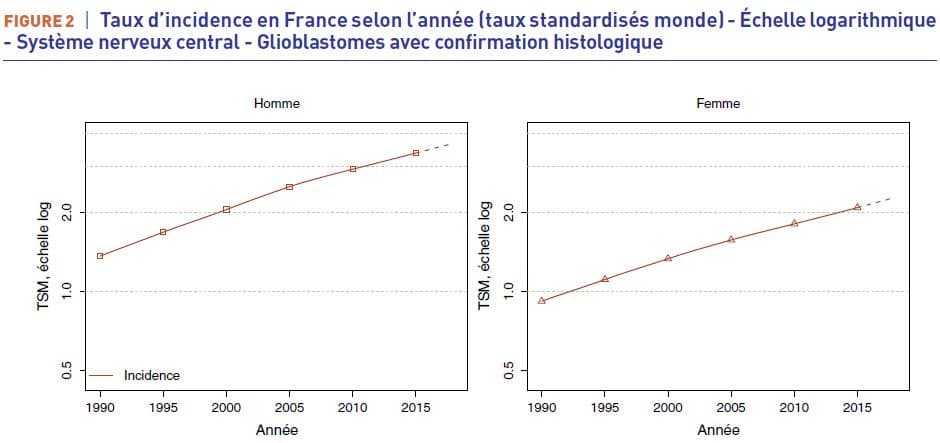
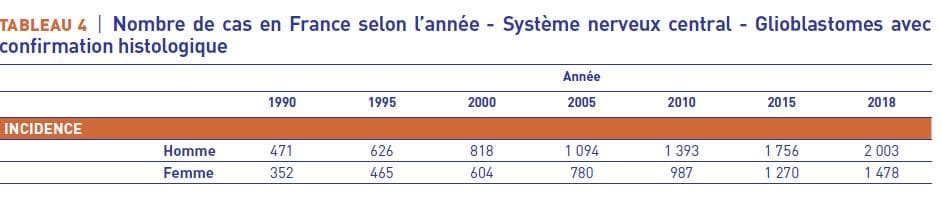
Volume 1 of the report is devoted to solid tumors (27 tumors and 22 subtypes). Between 1990 and 2018, the overall incidence rate of solid tumors remained relatively stable in men and continued to increase in women. At the same time, the annual number of new cases of glioblastoma with histological confirmation (one of the most aggressive types of brain cancer) has increased fourfold and more for both sexes.
In 30 years, the number of glioblastomas multiplied by 4, affecting all ages
Santé Publique France estimates that there will be 3,481 new cases of these glioblastomas in metropolitan France in 2018, 58% of them in men. There were only 823 in 1990.
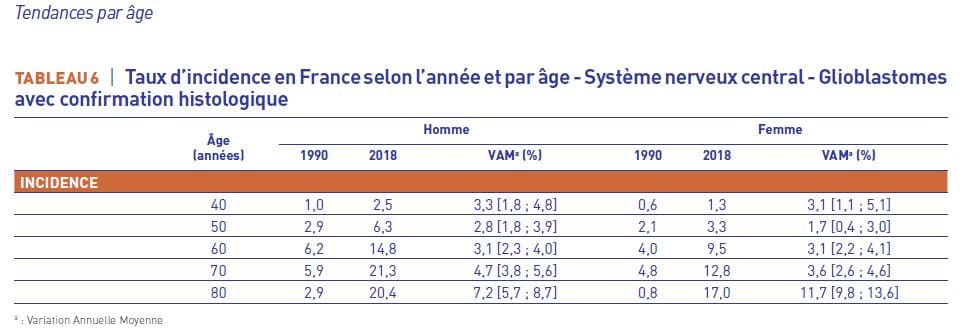
Age trends show an increase in incidence regardless of age and gender between 1990 and 2018.
According to Santé Publique France, similar observations are observed in the United States where an increase in the incidence of glioblastoma was also observed in the years 1980-1990 in connection with diagnostic progress. In addition, an Australian study reports an increasing incidence of histological confirmed glioblastoma over the period 2000-2008.
Exposure to waves is one of the possible factors
In conclusion of its analysis, Santé Publique France considers that the extrinsic factors that may play a role in increasing the incidence of glioblastoma could be:
“brain radiation therapy and possibly intense and prolonged exposure to pesticides (farmers)[14]. The latest epidemiological studies and animal experiments would support the carcinogenic role of exposure to electromagnetic fields[15]”
Absolute duty to protect children and young people
For Dr Annie Sasco, cancer epidemiologist, former Director of Research Unit at IARC-WHO:
“The evolution of incidence and mortality rates of central nervous system tumors as a whole and especially glioblastoma over the past 30 years is of particular concern. Of course, diagnostic behaviours have evolved and play a role, especially for older people. Nevertheless, there is a real increase, even among the youngest, for whom it is likely that diagnostic modalities have changed less than among the elderly and which may therefore be linked to environmental factors and primarily to the use of mobile or wireless phones. Informing the public should make it possible not to continue on this upward trajectory, especially among young people, with an absolute duty to protect children by not allowing them to use a cellular phone and in general by protecting them from exposure to electromagnetic fields“.
Urgency for public authorities to act in the face of tens of thousands of deaths
For Dr. Marc Arazi, President of Phonegate Alert:
“Over the last 2 decades, nearly 50,000 people have been affected in France by this extremely aggressive brain tumor, which has a very high mortality rate. It was also during this period that mobile telephony exploded and industrialists knowingly overexposed us to the waves of our mobile phones. This industrial and health scandal has a name, the “Phonegate”! Public authorities can no longer deny the evidence and must urgently protect the health of tens of millions of users.
Posted inUncategorized|Comments Off on Brain cancers : 4 times more new cases of glioblastoma in 2018 according to Public Health France (Press Release)
Posted inUncategorized|Comments Off on A Critical Review of Digital Technology in Education that Should Give Policy Makers and Educators Pause for Thought – Prof Tom Butler U.C.C.
Attorney-at-law Christian Jensen, of Bonnor Lawyers in Denmark, examined potential health damages and risks of 5G in relation to human rights and environmental conventions.
The legal opinion is centred around results that have positively documented actual damages or risks to humans, animals and plants. Jensen points out that this research is “inherently of much greater significance than examinations which have been incapable of identifying a damage or risk thereof, since the latter group does not in itself exclude the possibility that there exist real damage or risks”.
He explains that “If it has on one occasion defensibly been scientifically proven that there is a damaging effect or risk of damage, then the fact that ten other defensible trials did not show such an effect or risk is irrelevant. It is then merely up to the scientific community to clarify why the ten defensible trials did not show what is scientifically proven, in order to better understand why and how the damages occur or could occur”.
In his final remarks, on page 64 of the 75-page document, Jensen states that:
“It is the conclusion of this legal opinion that establishing and activating a 5G-network, as it is currently described, would be in contravention of current human and environmental laws enshrined in the European Convention on Human Rights, the UN Convention on the Rights of the Child, EU regulations, and the Bern- and Bonn-conventions.
The reason is the very significant body of scientific documentation available, showing that radiofrequency electromagnetic radiation is harmful and dangerous to the health of humans (particularly children), animals and plants.
This also applies when the radiation remains within the limits recommended by ICNIRP and currently used in Denmark as well as broadly within the EU.”
This opinion is also relevant to Australia. Australia is a signatory to both the United Nations Convention on the Rights of the Child and theBonn convention (also known as the Convention on the Conservation of Migratory Species of Wild Animals). European Union directives don’t apply in Australia; however, decisions made by the European Court of Human Rights, which has responsibility for monitoring compliance with the rights and freedoms set out by the European Convention on Human Rights,influence the development of human rights law in Australia.
The International Committee on Non-Ionising Radiation Protection (ICNIRP) are a private self appointed body or NGO who together with the Advisory Group on Non-ionising Radiation (AGNIR) and Public Health England (PHE), have somehow ended up effectively setting microwave radiation exposure ‘safety’ standards for the populations of large parts of the world since the 1990s.
In May 2011, Mr Jean Huss from the EU Committee on the Environment, Agriculture and Local and Regional Affairs in a report entitled “The potential dangers of electromagnetic fields and their effect on the environment” made the following statement on the credibility of ICNIRP.
The rapporteur underlines in this context that it is most curious, to say the least, that the applicable official threshold values for limiting the health impact of extremely low frequency electromagnetic fields and high frequency waves were drawn up and proposed to international political institutions (WHO, European Commission, governments) by the ICNIRP, an NGO whose origin and structure are none too clear and which is furthermore suspected of having rather close links with the industries whose expansion is shaped by recommendations for maximum threshold values for the different frequencies of electromagnetic fields.
An organisation whose origin and structure is none too clear and which is suspected of having rather too close links with the interests of the industries it notionally ‘regulates’. Indeed, how do such bodies mysteriously come about in the first place? NGOs may technically be non-governmental organisations but that doesn’t mean that they are necessarily non-political organisations, so called scientific ‘objectivity’ is always shaped and influenced to some degree by political and economic considerations and NGOs are subject to corporate capture and corruption just as much as a sporting ruling body such as FIFA. How is it that a group of people manage to self appoint themselves as the reliable regulatory body which takes upon itself to decide what is supposedly safe for the rest of us or not?
Was ICNIRP funded, established or captured by the very industries it was designed to ‘regulate’? Given the endemic corruption which is the hallmark of Neoliberal deregulation in general one would have to say that in all probability: yes.
Anthony J. Swerdlow, who was the ICNIRP Chair of the standing committee on epidemiology contributed to a paper of 2011which concluded that ” the trend in the accumulating evidence is increasingly against the hypothesis that mobile phone use can cause brain tumors in adults“. Swerdlow on this occasion, declared in a mere footnote and not any statement of interests or conflict of interests that “A.J.S. holds shares in the telecom companies Cable and Wireless Worldwide and Cable and Wireless Communications. A.J.S.’s wife holds shares in the BT group, a global telecommunications services company. ” Should the chair of the supposedly ‘independent’ body setting the guidelines of microwave radiation protection and also his wife – really be holding shares in the very same companies he is supposed to be regulating? How is this not an extreme conflict of interests?
Why is the origin and structure of ICNIRP so opaque when the decisions it has made have had direct impacts on the health of billions of people? This is something which is far more than ‘curious to say the least’ and should be a matter of thorough public investigation considering what is at stake in all of this in terms of global public health. Billions of people may well have been adversely effected by the extremist decisions of this self appointed scientific oracle of health and safety to which the whole world seems to have meekly deferred to without asking any real questions.
In terms of its philosophy, it turns out that ICNIRP is something of a closed ideological shop, in that in order to be accepted or invited to become a member of ICNIRP, one is preliminarily required to strictly adhere to the thermal paradigm in terms of radiation health and safety. This paradigm in terms of its followers and their beliefs, asserts that only short term, extremely high exposure to non-ionising microwave radiation that produces a large thermal effect is deemed to be hazardous to human health. Once one adopts that position, then all non-ionising radiation that falls below these levels is automatically and universally assumed to be benign. Once this paradigm is also accepted by government and other bodies such as Public Health England, then the burden falls on those subjected to such now completely unregulated sources of radiation to prove that far lower levels of exposure are indeed harmful, whereas conversely, there is no burden on the industry to irrefutably demonstrate that such exposures are completely and utterly safe. Because in the real world there are no control groups on account of the universal exposure of all the population to such radiation sources then proving irrefutable links between illness and exposure is intensely problematic.
In taking this highly selective approach ICNIRP have effectively inverted the conventions of environmental risk assessments. Don Maisch describes this reversal of principles in the ‘Procrustean Approach’.
Risk assessment for chemicals reversed for non-ionizing electromagnetic radiation
It is important to note that when it comes to risk assessment that serves as the basis for Western radiofrequency and microwave (RF/MW) standards there is a fundamental departure from conventional risk assessment as used for chemicals. In their 1995 review of risk assessment of environmental chemicals, Fan, Howd and Davis point out that when assessing human exposure to chemicals, environmental levels are the focus. In other words, protecting the public from toxic effects of chemicals in the environment involves consideration of possible mechanisms of low-level toxicity and likely biological effects at low levels of exposure. In addition, the potential for cumulative (long-term), irreversible effects, such as cancer induction and neurotoxicity, are important considerations. There may be debate over what is the lowest level at which a hazard from a chemical may exist, but calculations are aimed at determining the lowest-dose toxic effects to provide human health protection. The obvious adverse effects from high level exposures are not usually a focus of risk assessment as there is no uncertainty on hazards at high-level exposure. Just the reverse applies to the risk assessment of possible hazards from human exposure to non-ionizing radiation from extremely low frequency (ELF) electromagnetic fields (EMF) to RF/MW electromagnetic radiation (EMR), as examined in this thesis. This thesis explores reasons why a risk assessment paradigm developed in the so-called ‘Western world’ that only provides protection from obvious adverse effects at high-intensity (acute) exposures unlikely to be encountered in the environment. The possibility of cumulative effects, cancer induction and neurological effects arising from low-intensity exposures that could be encountered in the environment are not a consideration in assessing human health risks [Under ICNIRP’s terms]. This has been pointed out in a Swiss government agency publication ‘Electrosmog in the Environment’ where it is stated “Exposure limit values [in Western standards/guidelines] ensure protection against recognised, acute effects, but they do not protect against suspected effects at lower radiation intensities, especially with long-term exposure”. This thesis proposes that such a radical departure from accepted risk assessment practice is based on reasons that primarily are to ensure the continuing development of both corporate and military technology at the expense of public health considerations. This assessment is in agreement with Michaels & Monforton in their observations that both corporate and a revisionist political influence in the risk assessment process has affected the outcome of supposedly scientific risk assessments to marginalize the interests of the public, while at the same time maximizing the influence of the vested interest corporate sector.
Posted inUncategorized|Comments Off on How ICNIRP, AGNIR, PHE and a 30 year old political decision created and then covered up a global public health scandal
French health officials want cell phone users to be better informed of potential risks and are urging them to take precautionary steps to limit their radiation exposures.
The move comes after an government health and safety agency (ANSES) issued an October 21advisory warning the public not to carry phones in shirt or trouser pockets.
The French government wants the European Commission to require measurements indicating how much energy is absorbed (SAR) when the phone is next to the body —that is, with the phone in simulated contact with the user. Current protocols allow a 5 mm separation.
On October 25, the Ministry of Social Affairs and Health issued a statement with these key points*:
1. France will ask the European Commission to reinforce the requirements for new mobile phones put on the market. As recommended by the National Agency for Safety, Environment and Labor (ANSES), the Government will request that the approval tests be carried out in contact with the apparatus, and not 5 mm away as is currently the case. This will be more representative of actual exposures;
2. The National Frequency Agency (ANFR) will develop tools to improve user information:
• The mobile application “Open Barres” will be completed by the end of the year to allow each user to know the emissions of his mobile phone model;
• The recommended usage distance will also be indicated on the ANFR website, which already cites distances for the telephones checked, as well as the “Open Barres” application. If there is cooperation from manufacturers, they will be available by the end of the year.
3. The Government will bring together major manufacturers to take voluntary steps to update the software of their models already on the market, before the adoption of recent, more restrictive emission standards;
4. ANFR’s monitoring of products placed on the market will be increased by 30% in 2020.
The government reaffirmed its advice that users take these safety steps:
1. Use a hands-free kit 2. Favor text messages over phone calls 3. Favor areas with good reception 4. Avoid holding your phone to the ear when in a car, bus or train 5. Pick a mobile phone with a low SAR 6. Avoid long conversations
The full announcement (in French) is here, an English version is here.
The technology is coming, but contrary to what some people say, there could be health risks
By Joel M. Moskowitz PhD
The telecommunications industry and their experts have accused many scientists who have researched the effects of cell phone radiation of “fear mongering” over the advent of wireless technology’s 5G. Since much of our research is publicly-funded, we believe it is our ethical responsibility to inform the public about what the peer-reviewed scientific literature tells us about the health risks from wireless radiation.
The chairman of the Federal Communications Commission (FCC) recently announced through a press release that the commission will soon reaffirm the radio frequency radiation (RFR) exposure limits that the FCC adopted in the late 1990s. These limits are based upon a behavioral change in rats exposed to microwave radiation and were designed to protect us from short-term heating risks due to RFR exposure.
Yet, since the FCC adopted these limits based largely on research from the 1980s, the preponderance of peer-reviewed research, more than 500 studies, have found harmful biologic or health effects from exposure to RFR at intensities too low to cause significant heating.
Citing this large body of research, more than 240 scientists who have published peer-reviewed research on the biologic and health effects of nonionizing electromagnetic fields (EMF) signed the International EMF Scientist Appeal, which calls for stronger exposure limits. The appeal makes the following assertions:
“Numerous recent scientific publications have shown that EMF affects living organisms at levels well below most international and national guidelines. Effects include increased cancer risk, cellular stress, increase in harmful free radicals, genetic damages, structural and functional changes of the reproductive system, learning and memory deficits, neurological disorders, and negative impacts on general well-being in humans. Damage goes well beyond the human race, as there is growing evidence of harmful effects to both plant and animal life.”
The scientists who signed this appeal arguably constitute the majority of experts on the effects of nonionizing radiation. They have published more than 2,000 papers and letters on EMF in professional journals.
The FCC’s RFR exposure limits regulate the intensity of exposure, taking into account the frequency of the carrier waves, but ignore the signaling properties of the RFR. Along with the patterning and duration of exposures, certain characteristics of the signal (e.g., pulsing, polarization) increase the biologic and health impacts of the exposure. New exposure limits are needed which account for these differential effects. Moreover, these limits should be based on a biological effect, not a change in a laboratory rat’s behavior.
The World Health Organization’s International Agency for Research on Cancer (IARC) classified RFR as “possibly carcinogenic to humans” in 2011. Last year, a $30 million study conducted by the U.S. National Toxicology Program (NTP) found “clear evidence” that two years of exposure to cell phone RFR increased cancer in male rats and damaged DNA in rats and mice of both sexes. The Ramazzini Institute in Italy replicated the key finding of the NTP using a different carrier frequency and much weaker exposure to cell phone radiation over the life of the rats.
Based upon the research published since 2011, including human and animal studies and mechanistic data, the IARC has recently prioritized RFR to be reviewed again in the next five years. Since many EMF scientists believe we now have sufficient evidence to consider RFR as either a probable or known human carcinogen, the IARC will likely upgrade the carcinogenic potential of RFR in the near future.
Nonetheless, without conducting a formal risk assessment or a systematic review of the research on RFR health effects, the FDA recently reaffirmed the FCC’s 1996 exposure limits in a letter to the FCC, stating that the agency had “concluded that no changes to the current standards are warranted at this time,” and that “NTP’s experimental findings should not be applied to human cell phone usage.” The letter stated that “the available scientific evidence to date does not support adverse health effects in humans due to exposures at or under the current limits.”
The latest cellular technology, 5G, will employ millimeter waves for the first time in addition to microwaves that have been in use for older cellular technologies, 2G through 4G. Given limited reach, 5G will require cell antennas every 100 to 200 meters, exposing many people to millimeter wave radiation. 5G also employs new technologies (e.g., active antennas capable of beam-forming; phased arrays; massive inputs and outputs, known as MIMO) which pose unique challenges for measuring exposures.
Millimeter waves are mostly absorbed within a few millimeters of human skin and in the surface layers of the cornea. Short-term exposure can have adverse physiological effects in the peripheral nervous system, the immune system and the cardiovascular system. The research suggests that long-term exposure may pose health risks to the skin (e.g., melanoma), the eyes (e.g., ocular melanoma) and the testes (e.g., sterility).
Since 5G is a new technology, there is no research on health effects, so we are “flying blind” to quote a U.S. senator. However, we have considerable evidence about the harmful effects of 2G and 3G. Little is known the effects of exposure to 4G, a 10-year-old technology, because governments have been remiss in funding this research. Meanwhile, we are seeing increases in certain types of head and neck tumors in tumor registries, which may be at least partially attributable to the proliferation of cell phone radiation. These increases are consistent with results from case-control studies of tumor risk in heavy cell phone users.
5G will not replace 4G; it will accompany 4G for the near future and possibly over the long term. If there are synergistic effects from simultaneous exposures to multiple types of RFR, our overall risk of harm from RFR may increase substantially. Cancer is not the only risk as there is considerable evidence that RFR causes neurological disorders and reproductive harm, likely due to oxidative stress.
As a society, should we invest hundreds of billions of dollars deploying 5G, a cellular technology that requires the installation of 800,000 or more new cell antenna sites in the U.S. close to where we live, work and play?
Instead, we should support the recommendations of the 250 scientists and medical doctors who signed the 5G Appeal that calls for an immediate moratorium on the deployment of 5G and demand that our government fund the research needed to adopt biologically based exposure limits that protect our health and safety.
The views expressed are those of the author(s) and are not necessarily those of Scientific American.
ABOUT THE AUTHOR(S)
Joel M. Moskowitz
Joel M. Moskowitz, PhD, is director of the Center for Family and Community Health in the School of Public Health at the University of California, Berkeley. He has been translating and disseminating the research on wireless radiation health effects since 2009 after he and his colleagues published a review paper that found long-term cell phone users were at greater risk of brain tumors. His Electromagnetic Radiation Safety website has had more than two million page views since 2013. He is an unpaid advisor to the International EMF Scientist Appeal and Physicians for Safe Technology.
A LEADING expert on the health effects of wireless technology and microwave radiation has said he is very concerned about the fact that wi-fi is installed in Irish primary schools.
Professor Tom Butler from UCC made the comment while addressing a well-attended meeting entitled ‘What is 5G?’ recently held in O’Donovan’s Hotel in Clonakilty.
Speaking to The Southern Star afterwards, Professor Butler said that given his extensive review of the scientific literature and practice in other countries, it is one of concern for him.
‘Wi-fi should not be in Irish schools and on the teaching side of things, it serves very little purpose in a child’s education. Wired technologies are available and are just as effective as wireless technology,’ said Prof Butler.
‘Given the risks that many studies have identified and given the fact that Ireland is supposed to have entered the Precautionary Principle under EU Law, one of the areas is that you minimise the risk to children,’ he said.
‘Two recent studies evaluated the educational performance of children in class in Saudi Arabia with two schools used, one was exposed to wi-fi and the other wasn’t. In the school that was most exposed the students, all things being equal, had difficulties in terms of learning and in achieving their learning objectives and in simple acts of
comprehension.’
Prof Butler said that given this evidence and given the Precautionary Principle, it makes sense to him that school principals should be outlawing it on their premises.
‘However, there are schools, particularly primary schools, which have resisted the imposition of wi-fi upon them, but there other schools where there are principals who are enthusiastic about technology.
‘There’s nothing wrong with that, but they’re totally unaware of the risks that they’re exposing children to and even staff, especially those who are pregnant.’
Prof Butler also said he has heard that some of the early promoters of using ipads in schools are taking them out of the schools, because they have found that they are not useful for teaching.
‘I teach IT and I actually ban all IT technology during my class,’ he added.
Prof Butler, a former satellite and microwave communication engineer, also outlined his fears about 5G – which promises superfast internet with endless wireless applications – and believes its effect will be wide-ranging.
‘5G is like wi-fi on steroids, and the genie is out of the bottle now. We can’t put it back in.
‘But what we have to do here is recognise the risks that exist and get the powers that be to recognise those risks and do something about it, where children are concerned,’ he added.
‘We need to have the conversations about 5G and the cancer risks associated with it, and taking steps to avoid it as the mortality risks are very high.’
Posted inUncategorized|Comments Off on Oct 2019 – EM RADIATION RESEARCH TRUST PUTS UK GOVT ON NOTICE REGARDING 5G AMIDST PROFOUND WORLDWIDE HEALTH CONCERNS

![[Press release] Brain cancers : 4 times more new cases of glioblastoma in 2018 according to Public Health France](https://www.phonegatealert.org/wp-content/uploads/2019/11/logo_ogg-1.png)
 Prof Tom Butler of UCC.
 Electromagnetic Sense Ireland