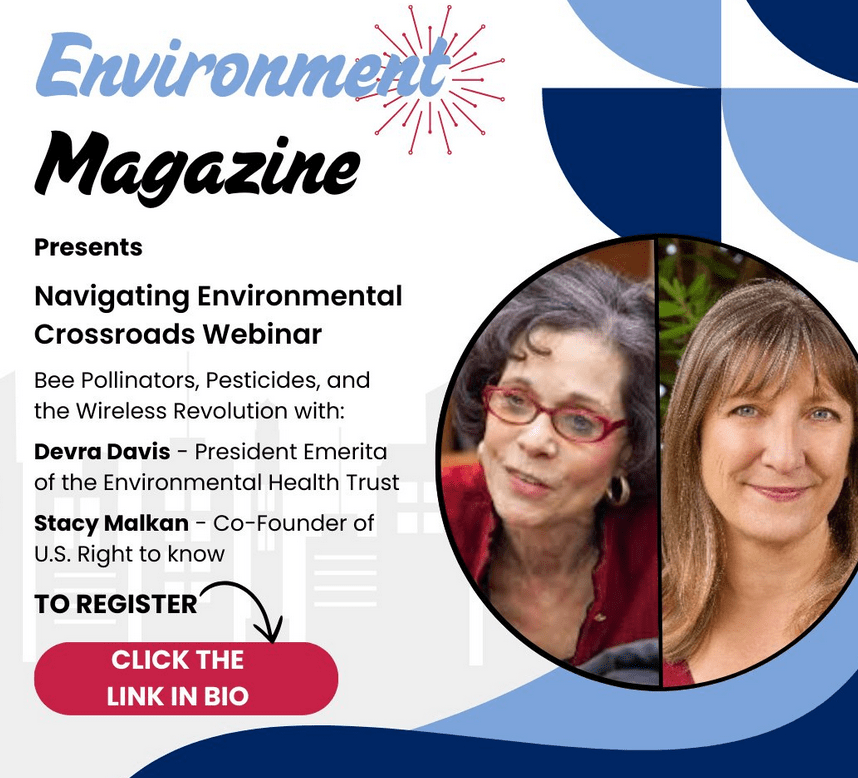
You’re invited to join Environmental Health Trust’s founder, Devra Davis, when she presents at the webinar Navigating Environmental Crossroads: Bee Pollinators, Pesticides, and the Wireless Revolution sponsored by Environment magazine publishers Taylor & Francis on March 26 at 5.00pm Ireland. The event, hosted on Zoom, is presented by University of California, Irvine.
During the webinar, Dr. Davis and other leading experts will explore the critically interconnected issues of pollinators, pesticides, and wireless technology, including the implications for policymaking and potential paths forward. The webinar offers an opportunity to engage in discussions on technology, ecology, the environment, and public health. The pioneering work of EHT President Kent Chamberlin and Vice President for Scientific Research and Clinical Studies Rob Brown will also be featured.
Please register for the March 26 webinar using the link below.
Navigating Environmental Crossroads: Bee Pollinators, Pesticides, and the Wireless Revolution
Date & Time
Mar 26, 2025 05:00 PM in Dublin
Description
Join us for an enlightening webinar exploring two critical environmental issues of our time. Leading experts will explore these interconnected issues, their implications for policy-making, and potential paths forward. Don’t miss this opportunity to engage with cutting-edge discussions on technology, ecology, environment, and public health. 1. Neonicotinoid Pesticides and Bees: Examining the impact of these widely-used pesticides on crucial pollinator populations and the implications for global food security. We’ll unravel the complex relationship between agricultural practices and pollinator health. We’ll examine the latest research on neonicotinoids’ impact on bee populations and discuss the policy implications for sustainable agriculture. 2. Wireless Technology: Navigating Policy Dilemmas and Systemic Risks in our increasingly connected world. We’ll explore the challenges policymakers face in balancing technological progress with potential long-term risks, including emerging concerns around widespread wireless adoption, potential human health effects and biodiversity impacts, and strategies for navigating the complex landscape of technological progress and precaution. Our distinguished speakers will delve into the latest research, policy challenges, and potential solutions surrounding these pressing environmental concerns. This webinar offers a unique opportunity to engage with leading experts as we explore the delicate balance between technological progress, environmental preservation, sustainability practices and public health. Moderator: Oladele A. Ogunseitan: Distinguished Professor, Department of Population Health & Disease Prevention, Department of Environmental & Occupational Health, Joe C. Wen School of Population & Public Health, University of California, Irvine.
Posted inUncategorized|Comments Off on Navigating Environmental Crossroads: Bee Pollinators, Pesticides, and the Wireless Revolution – Webinar 26th March
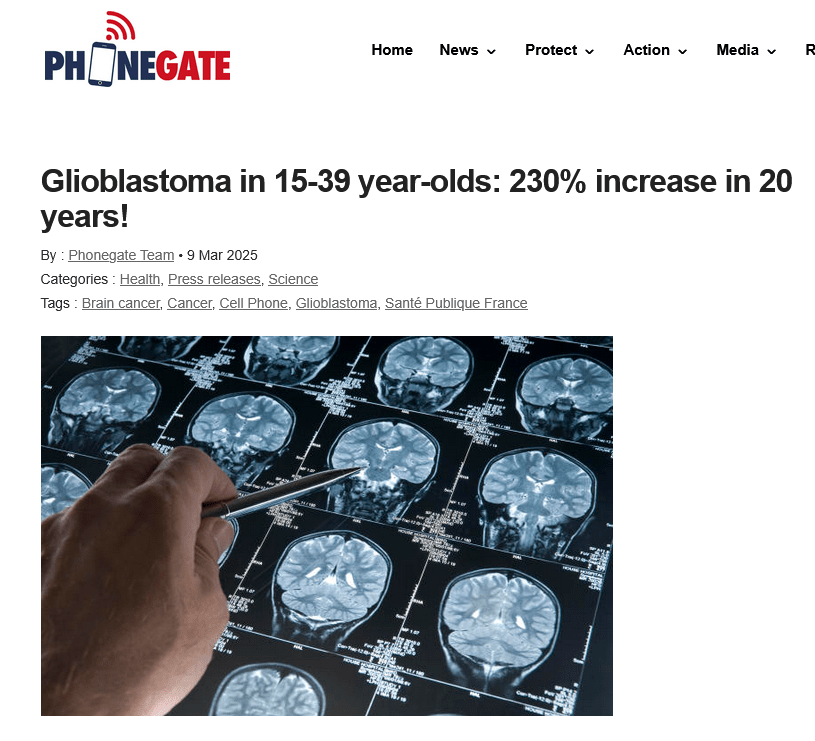
Phonegate Alert notes with the utmost attention the publication on March 3, 2025 of a study by Santé Publique France (SPF) on the incidence of cancers in adolescents and young adults (AYA) aged 15 to 39. This report reveals a worrying increase in glioblastoma (serious brain cancer) in this age group, with a significant rise of +6.11% per year over the period studied (2000-2020). This represents an overall increase of around 233% over 20 years!
Glioblastoma: Red alert among young people
This increase is particularly alarming, as it contrasts with trends observed for other types of cancer. While the overall incidence of cancers in the AYA population has seen an increase followed by stabilization (or even a slight decrease), the continuing rise in glioblastomas stands out. With regard to central nervous system (CNS) tumours in general, the study also highlights the need to interpret the data with caution due to various potential biases, but the specific increase in glioblastomas remains a major cause for concern.
The trend is accelerating: alarming!
In a report published in 2018, Santé Publique France noted a 4-fold increase in the number of glioblastomas in 30 years (i.e. a 300% increase over the period 1990-2018). Although a direct comparison is tricky, a cautious extrapolation of the increase in the AYA population over 30 years suggests that the trend may have accelerated further.
As SPF explains in this new report:
“…the increase in glioblastomas (+ 6.11% per year in this study) has already been observed in the report on the evolution of incidence between 1990 and 2018 [25] in which the incidence of histologically confirmed glioblastomas increased by + 3.6% per year in men and + 3.3% per year in women (all ages combined).”
Phonegate Alert once again sounds the alarm
This new study confirms the warnings that our NGO is constantly sounding concerning the potential risks associated with exposure to electromagnetic waves, particularly those emitted by cell phones.
“This study highlights the correlation in time between the massive use of smartphones by young people and the corresponding increase in glioblastomas. It also validates the alerts issued during the Phonegate scandal, which revealed overexposure to cell phone radiation during this period and even today,” says Dr. Marc Arazi, President of Phonegate Alert. He points to the responsibility of the public authorities and, above all, that of the cell phone industry.”
Glioblastoma: exposure to radio frequencies identified as a risk factor
The new SPF report again highlights, among known or suspected risk factors:
“ethnic origin, gender, family history of gliomas, genetic diseases, radiation or environmental exposures (particularly pesticides and electromagnetic fields), and medical imaging examinations delivering ionizing radiation [26-29].”
It’s time to act: our demands
Phonegate Alert insists on the need not to ignore this alarm signal and urges the health authorities to:
Strengthen independent research into the potential links between exposure to electromagnetic radiation and the development of glioblastoma in young adults and in the general population.
Better inform the public, and young people in particular, about the potential health risks (infertility, brain and central nervous system tumors) associated with the excessive and careless use of cell phones and other wave-emitting devices.
Immediately apply the precautionary principle to exposure to electromagnetic radiation, in particular by limiting exposure of children and adolescents.
An Bord Pleanála has insisted it does not formulate policy around planning decisions, despite a board member telling an investigation into its decisions a “change in policy emphasis” had encouraged the erection of telecommunications masts.
A recently-ended two-year investigation by senior counsel Lorna Lynch into planning matters at the agency concluded an undesirable “statistical anomaly” existed in terms of An Bord Pleanála inspectors’ recommendations to refuse permission for such masts being overturned by two specific board members.
Ms Lynch further concluded there were insufficient grounds to refer that matter to the minister for housing to decide whether or not those decisions constituted “stated misbehaviour”.
While the planning board has declined to publish Ms Lynch’s report on foot of legal advice, a summary of the report’s findings, recently released by board chair Peter Mullan, noted in coming to her conclusions regarding those mast decisions, Ms Lynch had “relied upon the evidence of one board member that there was a change in policy emphasis to a view that it was important to have mobile phone mast infrastructure, where possible”.
Planning policy in legal terms is ordinarily dictated by the minister for housing on foot of the Planning Act, with more general policy stemming from the National Planning Framework and, at a more granular level, the county development plans.
An Bord Pleanála was previously understood to be required to have regard to those policies in making its decisions, as opposed to dictating “policy emphasis” itself.
Planning lawyer with FP Logue Solicitors Eoin Brady, who has overseen a number of legal challenges of An Bord Pleanála’s previous mast decisions, said such a change in policy emphasis should be published so the public knows what criteria are being used to make planning decisions.
“They’re saying a change in policy emphasis. Well, is that change documented? We would want to see it, to be able to scrutinise it. How else are we to advise clients as to whether or not any decision has been properly arrived at if there is an unwritten policy?” Mr Brady said.
“We now know that there was a change in policy emphasis and the public are entitled to know what that change was, what the baseline was before, when the change happened, and crucially what is the policy now,” he said.
In response to a query from the Irish Examiner regarding Ms Lynch’s statement there had been a change in policy emphasis, a Bord Pleanála spokesperson said it “is not appropriate” for Mr Mullan to comment on Ms Lynch’s conclusions.
“The board itself does not formulate policy,” the spokesperson said.
Separate questions as to where or when the change in policy emphasis originated from, if it had been documented in writing or officially published, and as to what the policy is now, were not responded to.
The Irish Examiner first reported in May 2022 that former deputy chair of ABP Paul Hyde had voted to overrule his own planning inspectors in the majority of applications for telecommunications masts over the previous two years.
Mr Hyde later separately pleaded guilty to two offences in terms of non-declaration of assets and received a criminal conviction, though a custodial sentence was overturned on appeal.
Posted inUncategorized|Comments Off on Review of ESRI Survey & Report August 2024: ‘Public Perceptions of Electromagnetic Fields and Environmental Health Risks’
PAPER: A Critical Analysis of the World Health Organization (WHO) Systematic Review 2024 on Radiofrequency Radiation Exposure and Cancer Risks (open access)
Lennart Hardell and Mona Nilsson
Abstract
Radiofrequency (RF) radiation was in 2011 classified as a possible human carcinogen by the International Agency for Research on Cancer (IARC) at the WHO. Currently the WHO undertakes a systematic review of human studies on the cancer risks. In a publication by Karipidis et al (2024), commissioned by the WHO, it was argued that based on all available studies there would be “moderate certanity evidence” that mobile phone use “likely does not increase the risk of glioma, meningioma, acoustic neuroma, pituitary tumours, and salivary gland tumours in adults, or of paediatric brain tumours.” However, the authors have overlooked results showing increased risks for brain tumours in the most exposed groups, the most exposed part of the head, and longest latency time from first exposure to tumour diagnosis. The authors also claimed that there would be “moderate certainty evidence” that transmitters and mobile phone base stations do not increase the risk of pediatric leukaemia. These conclusions are based on selective inclusion of very few and low exposure studies. This WHO evaluation is contradicted by scientific results that show increased risks of cancer from exposure to RF-radiation from mobile and cordless phones, transmitters, and base stations. Other scientists have concluded, after reviewing the available evidence, that RF-radiation may increase the risk of cancer. This article analysis the Karipidis et al review and highlights several errors, omissions, and conflicts of interests that may explain the conclusions of no cancer risk. The flawed evaluation of scientific facts should lead to retraction of the article.’
Posted inUncategorized|Comments Off on A Critical Analysis of the World Health Organization (WHO) Systematic Review 2024 On RF Radiation Exposure and Cancer Risks – Hardell & Nilsson
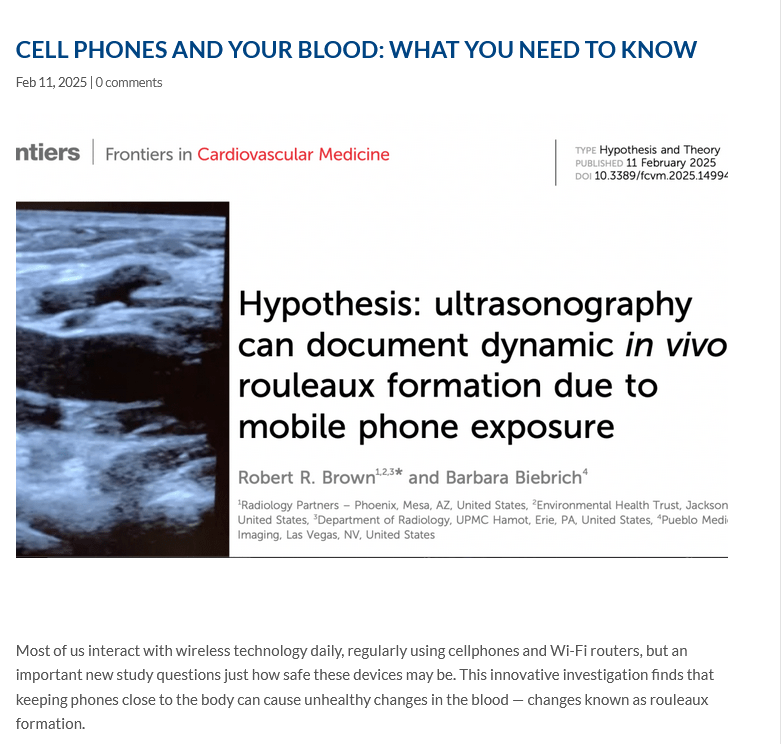
Dr. Robert Brown, Vice President of Scientific Research and Clinical Affairs for the Environmental Health Trust and a diagnostic radiologist with extensive experience evaluating blood flow using diagnostic ultrasound, and his colleague Barbara Biebrich, a senior ultrasound technologist with decades of experience performing vascular ultrasounds, decided to test whether ultrasound could detect and display rouleaux blood clumps forming in real time, in a healthy volunteer.
The International Commission on the Biological Effects of Electromagnetic Fields has published a Letter to the Editor in the journal Environment International regarding the scientific flaws of the WHO backed cell phone radiation cancer study by Karipidis et al. (2024) . We found the review does not provide a reliable assessment of the evidence on brain cancer risk associated with the use of cell phones and other wireless technologies.
After many hard-working months, the OneName Project has reached the end of its one-name quest…and entered a new era of advocacy for our community, an era defined by respect, empowerment, and unity of message — under the banner of one name. Yes, it’s happened. Based on your rich and varied input, top leaders of the movement from the US, Canada, and Europe have chosen one, singular, powerful name to label the condition that many of us share:
The OneName Project brought together people living with wireless radiation sickness, leading wireless radiation experts, safe technology advocates and medical professionals to choose a single, unifying, non-stigmatizing term for illness caused by exposure to wireless radiation and electromagnetic fields.
by Suzanne Burdick, Ph.D.
January 28, 2025
‘Wireless radiation sickness has a new and more universally acceptable name: Electromagnetic Radiation Syndrome, or EMR Syndrome, according to a press release issued by the OneName Project.
EMR Syndrome is a “new unifying name for a 21st-century health crisis,” the press release said.
Millions of people experience physical symptoms — including headaches, insomnia, heart palpitations and more — when exposed to electromagnetic radiation (EMR), according to the press release.
But until now, it’s been difficult for these individuals to advocate for themselves and educate others because there’s been no single, easily understandable term for the condition.
Instead, there were multiple names, including electromagnetic sensitivity, electrohypersensitivity, microwave syndrome, Havana syndrome and others.
Some of these names stigmatized the people by labeling them as “sensitive,” instead of placing the blame on the radiation that was causing their illness. Other names confused the public — such as microwave and Havana syndrome — because they sounded like references to microwave ovens and the capital of Cuba, rather than wireless radiation from cellphones, Wi-Fi routers and smart devices.
Do you remember the song ”Stop! In the Name of Love”, a 1965 hit recorded by the trio Florence Ballard, Mary Wilson & Diana Ross, also known as The Supremes, for the Motown label, and written and produced by Motown’s main production team Eddie Holland, Lamont Dozier, and Brian Holland.
Dozier said that he got the idea after he got cheated on by his girlfriend. In the heat of the argument, he said, ”Baby, please stop. In the name of love – before you break my heart.” (I recall that The Supremes’ choreography for this song involved one hand on the hip and the other outstretched in a ”stop” gesture.) Nearly 60 years later, I strongly argue that we must say, ”Stop! In the Name of Life”. Why…? Let me explain!
Occurrence of new, antibiotic-resistant, high-risk bacterial clones
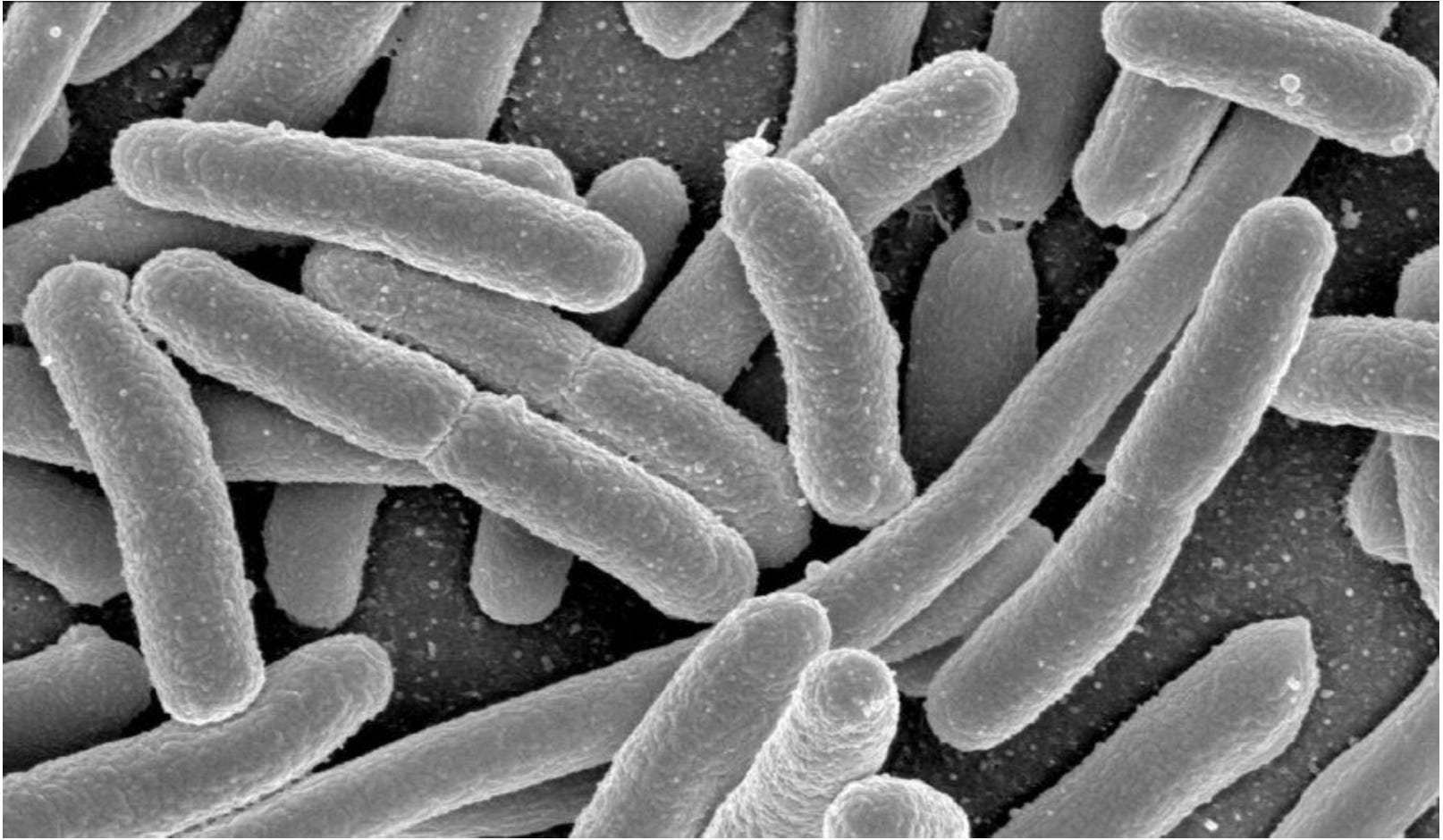
A short time ago, in November 2024, I read that a multi-resistant strain of the Escherichia coli (E. coli) bacteria has taken hold in Europe. According to a new study, the occurrence of new, more resistant forms of a high-risk clone has increased sharply in recent years, including also in my own country, Sweden. Traditionally, E. coli bacteria are spread via water, food and contact with infected humans, the latter especially in hospitals where a lot of antibiotics are used.
By mapping the genetic mass of the E. coli bacteria, the European infection control agency, The European Centre for Disease Prevention and Control (ECDC), in collaboration with, among others, the Swedish Public Health Agency, has been able to show how the resistant bacteria that carry ESBL-CARBA (Extended Spectrum Beta-Lactamase with Carbapenemase Activity, a substance found in some bacteria that makes them resistant to certain antibiotics) has spread within and between European countries. The study was recently published in the journal Eurosurveillance (Kohlenberg et al. 2024).
”The study gives further evidence of the serious increase in multi-resistant bacteria that risks reducing the possibility of treating severe bacterial infections in the future. Urgent measures are required to counter the spread of antibiotic-resistant bacteria in Sweden and globally”, says Vilhelm Müller, investigator at the Swedish Public Health Agency.
Infections difficult to treat now will become very difficult, or even impossible, to treat in the near future … and that will also include ordinary, everyday ones!
E. coli bacteria normally occur in our intestinal flora, but this particular clone is a common cause of, among other things, urinary tract infection and blood poisoning (sepsis). The bacteria now studied are resistant to several common treatment options, including broad- spectrum antibiotics such as carbapenems (carbapenems are antibiotics that work against many different bacterial species and are reserved for the treatment of infections in seriously ill patients and infections caused by bacteria resistant to first-line therapy).
E. coli. Photo: IAID, Public Domain
The consequence is that there are only a few treatment options left for patients with these infections. Down the line, if this antibiotic resistance is not countered, there is a risk that even simple, ordinary, everyday infections can no longer be treated, like a splinter in your thumb, and you, therefore, risk dying. To state that this new situation is severe and dramatic must be this century’s biggest ’understatement’.
Resistant bacteria a global health threat
The World Health Organization (WHO) classifies carbapenem-resistant bacteria as a global health threat and of the highest priority for research and development of new treatment methods. The ECDC study emphasizes the importance of continuing to develop and improve the conditions for reducing the spread of multi-resistant bacteria.
To map the occurrence and spread of multi-resistant bacteria across national borders is now of paramount importance, as are much more restricted open-border policies across the world, and limits on international work and holiday journeys.
(It should be noted that the recent COVID pandemic not at all reached the same global health threat classification level, as antibiotic resistance does. The latter even has been characterized, by the WHO, as the worst threat to mankind, and antibiotic resistance is referred to as ”the silent tsunami facing modern medicine”.)
A high-risk clone is a resistant bacterium of great clinical importance that has the ability to spread with high efficiency in inpatient care, cause serious infection, and cause long-term carriage in humans. High-risk clones are an important explanation for the spread of resistance in society.
The Swedish Public Health Agency closely follows the development of the number of cases and characterizes all findings with the aim of detecting and preventing the national spread of infection as well as changes in resistance mechanisms and resistance patterns. The same protective measures are now implemented in other countries as well.
Previous observations of antibiotic resistance around the world
On Monday, May 22, 2017, the newspaper Metro Stockholmreported that the Ministers of Health from the so-called G20 countries, including Australia, France, India, Italy, Japan, Canada, China, Russia, Saudi-Arabia, Great Britain, South Africa, Turkey, Germany and the USA, have decided to cooperate to counter the ever-increasing and alarming world-wide resistance of bacteria to antibiotics.
Only within the EU there are yearly more than 35,000 deaths due to antibiotic-resistant bacteria, and by the year 2050, it has been calculated that more than 10,000,000 people worldwide will die prematurely each year due to antibiotic resistance.
Among the measures presented were national action plans to be in force at the end of the year 2018. Furthermore, the G20 countries are striving to only allow antibiotics to be purchased via formal medical prescriptions, as well as working towards supplying these medicines at lower and more reasonable prices in poor countries.
All of the above sounds very serious and scary, but still in the hands of highly capable authorities, civil servants, politicians, and health care officers, doctors and nurses. But then why do they not pay attention to the following?
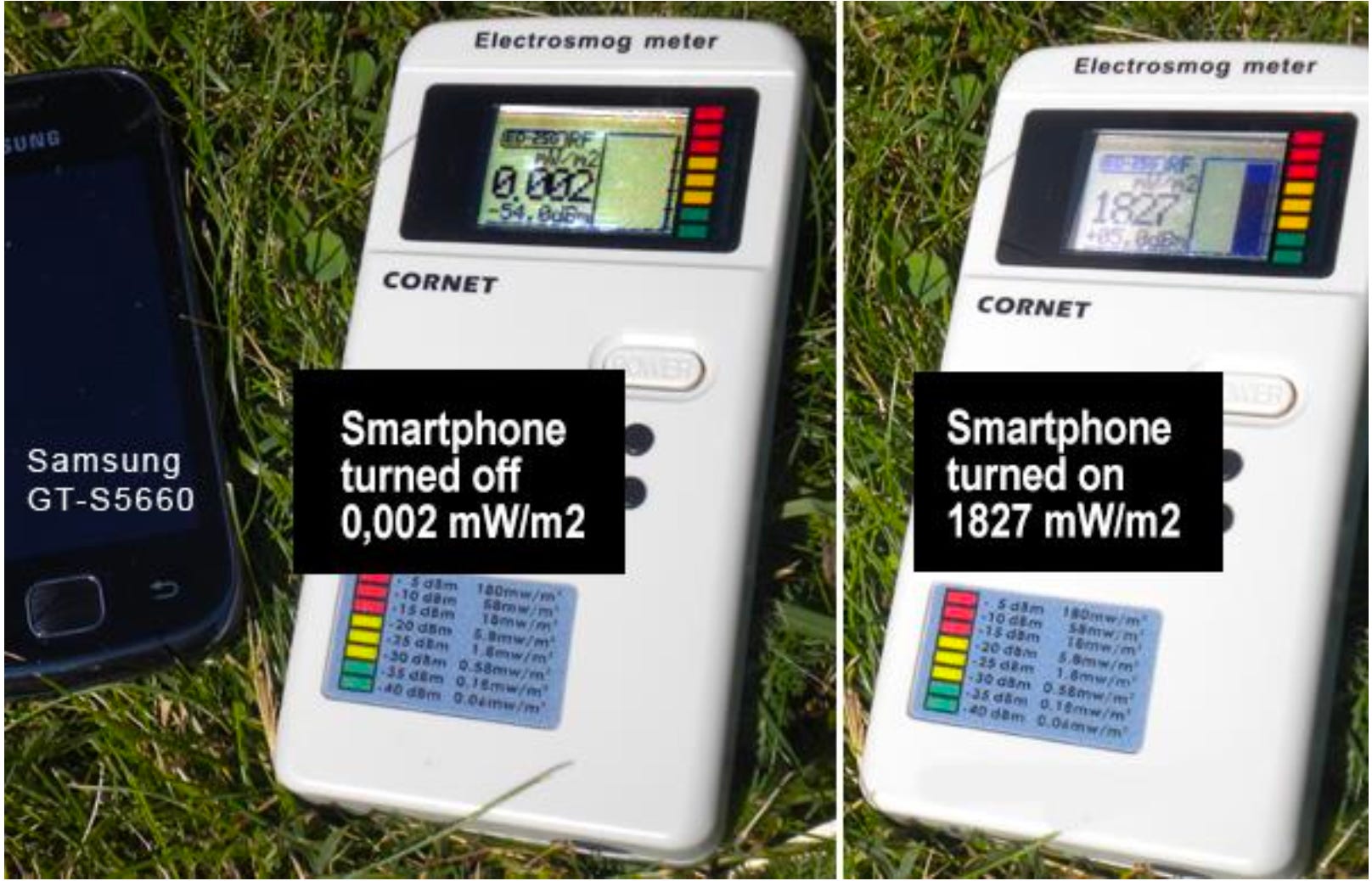
Electro smog metering. Photo: NewsVoice
Antibiotic resistance, cell phone and WiFi radiations, and bacterial communication using microwaves
Surprisingly enough, nothing is – however – mentioned about the very recent results of several international research units like that of Taheri et al. (2017, see here), who have demonstrated that the exposure to 900 MHz GSM mobile phone radiation and 2.4 GHz radiofrequency radiation emitted from common Wi-Fi routers made Listeria monocytogenes and Escherichia coli bacteria resistant to different antibiotics. These findings naturally have direct implications for the management of serious infectious diseases (cf. above), and may potentially lead to a future collapse of the global human population.
Another very important study is the US DARPA-funded one (Rao et al. 2022) which has found that bacteria, Staphylococcus aureus, biofilms communicate using frequencies that are in the range used by Wi-Fi and 5G C-band. The experiment found that notable radiation is observed in the 3-4 GHz band coming from the Staphylococcus aureus biofilms.
Radiation from three identical biofilm samples was monitored and recorded over 70 days. Two distinct frequency bands, namely the 3.18 GHz and the 3.45 GHz bands, were identified as potential “communication bands”. Furthermore, long-term and short-term cycles of the total radiation intensity within the band were observed over the course of the experiment.
So this recent study indicates that bacterial cells in biofilms may use electromagnetic signals to communicate which are of the similar type as our own cell phone and WiFi signals! Biofilms are one of the most ubiquitous forms of biological systems on earth, and are commonly associated with infectious diseases. They are also responsible for contamination of medical devices and implants, deterioration of water quality, and microbial-induced corrosion.
This work confirms the presence of electromagnetic radiation within bacterial communities, which is a key requirement to demonstrate electromagnetic signalling among bacterial cells. The insight could lead to breakthroughs in demystifying how cells communicate as well as the advancement of important technologies in biology and communication systems. But, much more importantly, this is a very firm and strong warning to mankind to stop playing with biology here on Earth – we may have to very profoundly regret it.
My personal comment to this is: just imagine what our man-made high-frequency signals, used by cell phones, wireless smart meters, WiFi systems, wireless baby alarms, DECT phones, Internet of Things (IoT), Internet of Bodies (IoB), and many more gadgets/installations/systems, delivered at colossal power levels compared to the natural ones, may do to these intricate communicative mechanisms!
The above may, in addition – if replicated by independent scientists in further controlled studies – explain the observed occurrence of antibiotic resistance after exposures of common bacteria, like Listeria monocytogenes and Escherichia coli, to the radiation of 2G mobile telephony or WiFi-router fields (cf. above; see also Johansson 2017).
Soil bacteria are also affected by radiation from mobile phone towers
It must also be noted that Sharma Antim Bala and coworkers (2018) have demonstrated the impact of the radiations transmitted by mobile tower base stations on microbial diversity in soil and antibiotic resistance patterns. Soil samples were taken from near four different base stations located in Dausa City, India, while control samples were taken far from any base stations.
Isolation and identification of microorganisms were done using biochemical reactions and antibiotic resistance was observed. Stenotrophomonas maltophilia, Chryseobacterium gleum, and Kocuria rosea were isolated and identified in soil samples collected near radiation- exposed zones.
A statistically significant greater antibiotic resistance was observed in microbes present in the soil near base stations compared to the control, using nalidixic acid and cefixime as antimicrobial agents (p<0.05). The authors stated that ”our findings suggest that mobile tower radiation can significantly alter the vital systems in microbes and turn them multidrug-resistant, which is the most important current threat to public health”.
With the ongoing huge and highly frightening development into more and more antibiotics-resistant microorganisms around the world, this adaptive phenomenon and its potential threats to human health, according to my view, definitely and rapidly should be further investigated in controlled replication experiments, rather than only spend money and time on national action plans, commercially lowering the prizes, and flying to Mars!
The War of the Worlds coming true?
Talking about the planet Mars, in H.G. Wells’ famous novel The War of the Worlds, the invading Martians were finally successfully battled only by the bacteria, which eventually killed them. Towards the end of the book, the narrator – to his surprise – discovers that all the Martians have been killed by an onslaught of earthly pathogens, to which they had no immunity: ”slain, after all man’s devices had failed, by the humblest things that God, in his wisdom, has put upon this earth”.
In The War of the Worlds, Wells explores the extremes of what is possible under evolution and natural selection. Are we heading to the same extreme now, or…? Are we now seeing the sequel with the bacteria again reacting to a hostile ’invasion’, this time of artificial, man-made electromagnetic fields and signals, but now instead killing off us – mankind – by their capacity to quickly adapt, producing new strains of antibiotic-resistant super-bacteria?!
And the only ones to actually be blamed for the extinction of ourselves are … us and our love for ”progress”. Do we suddenly have a red doomsday button within our reach?! And are you prepared to take a chance on it?
The functional impairment electrohypersensitivity, food, bacteria, and artificial radiation
Finally, it should be noted that people with severe electrohypersensitivity have noticed a direct relationship between the severity of their functional impairment and sugar ingested (not white sugar, but sugary food), and as a result, heightened levels of electromagnetic field sensitivity. Such a direct relationship to their diet/internal bad gut load just from one day of cheating on a diet can result in a massively overwhelming and irritating increase of the electromagnetic field sensitivity during the next day.
So the impact on gut bacteria (E. coli; Candida albicans?) by diet perhaps may trigger attacks of electrohypersensitivity?
Will this also be a symptom of bacteria with a deranged communication due to the impacts of artificial electromagnetic fields and signals from our ’smart’ world, the latter thus being not-so-smart? Perhaps it is high time to start de-smarting our life and our environment, and instead start listening carefully to our bacteria? Maybe they are trying to tell us something?
Conclusions
With all the new data from different investigations appearing, some days with several publications being released in parallel, maybe I was not wrong when I used my common sense and called for safety measures already back in the early 1980s; maybe it was morally and ethically 100% right to sound the alarm, thus to warn everyone that we are under attack of an invisible invader using the colossal exposure levels – of modern telecommunication technologies – to conquer our cells and tissues, and change their sensitivity to pharmaceutical treatment?
From a public health point of view, the proof in the form of thousands of peer review-based scientific publications, covering various health and biological impacts, is overwhelming – now society must act! To instead disengage academic scientists, with great know-how and a firm scientific curiosity, from their workplaces due to “lack of money” will not sound good in the future. Not at all.
Being a mental fire brigade soldier (aka scientist), personally, I would hate to arrive at the Pearly Gates and hear Saint Peter say:
“Why did you not react and act, Olle, you understood, you knew, you saw; you could and should have done much more!”
No, as a mental fire brigade soldier, I rather try my hardest and possibly be wrong – false alarms never make the ordinary firefighters or citizens weep, and so it should not make anyone sad or angry if my concerns are wrong. We must get out of the current society’s constant shooting at the piano player instead of listening to his or her tune, react to it, and act in a mature, adult way, using common sense.
As scientists we must have the clear, unmistakable and unambiguous right to sound the alarm, just like the ordinary fire brigade which we cherish for doing it one time too many rather than the opposite. This is a societal precautionary principle we must protect at all costs and not allow corporate, financial or political bullies to violate and destroy – never! For too long a time the latter have been allowed to run the show, and that must stop! In the name of love for life!
The above ECDC finding is potentially very important! It is part of a dangerous development I, Olle Johansson, have tried to emphasize and warn about for decades.
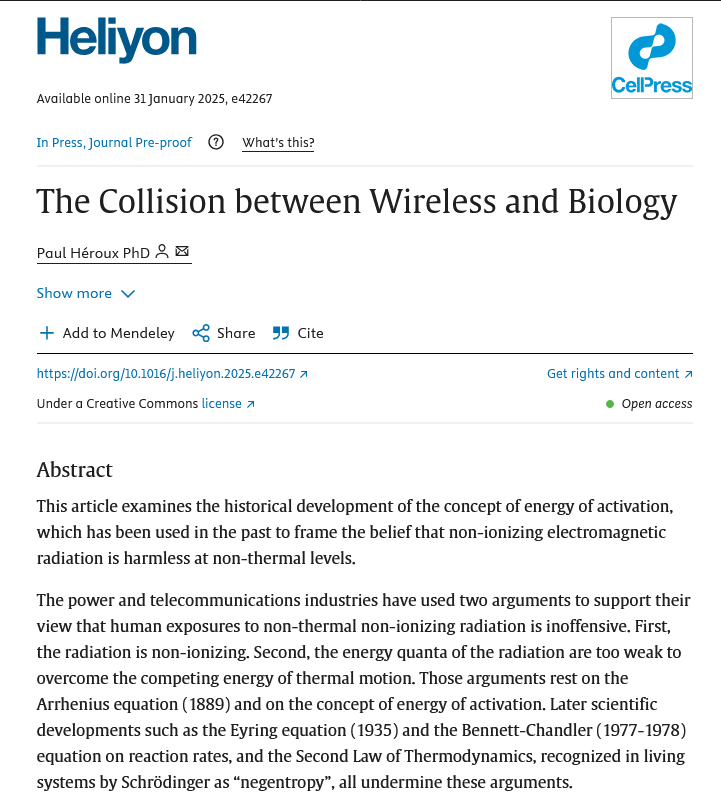
Science has already demonstrated that bacteria exposed to mobile phones and WiFi radiation are resistant to antibiotics. The implications of this are chilling and may easily explain the ongoing huge and highly frightening development of more and more antibiotics-resistant microorganisms around the world.
So I say again: Stop all forms of wireless energy feeds to bacteria. This potential madness must halt until we know if it is safe for everyone!
Stop! In the Name of Life!
By Olle Johansson, Ph.D, associate professor, and former head of The Experimental Dermatology Unit, Department of Neuroscience, Karolinska Institute, Stockholm, Sweden, and former guest and adjunct professor, respectively, of The Royal Institute of Technology, also Stockholm, Sweden. He is a world-leading authority in the field of artificial electromagnetic radiation and health & biological effects. Among many achievements he coined the term ”screen dermatitis” which later on was developed into the functional impairment electrohypersensitivity which recognition mainly is due to his work. Read his full bio here.
References
Bala SA, Os L, Lokendra S, Abhishek S, ”Effect of mobile tower radiation on microbial diversity in soil and antibiotic resistance,” In: 2018 International Conference on Power Energy, Environment and Intelligent Control (PEEIC), Greater Noida, India, 2018, pp. 311-314
Kohlenberg A, Svartström O, Apfalter P, Hartl R, Bogaerts P, Huang T-D, Chudejova K, Malisova L, Eisfeld J, Sandfort M, Hammerum AM, Roer L, Räisänen K, Dortet L, Bonnin RA, Tóth Á, Tóth K, Clarke C, Cormican M, Griškevičius A, Khonyongwa K, Meo M, Niedre-Otomere B, Vangravs R, Hendrickx APA, Notermans DW, Samuelsen Ø, Caniça M, Manageiro V, Müller V, Mäkitalo B, Kramar U, Pirs M, Palm D, Monnet DL, Alm E, Linkevicius M, ”Emergence of Escherichia coli ST131 carrying carbapenemase genes, European Union/European Economic Area, August 2012 to May 2024”, Euro Surveill. 2024; 29: pii=2400727 (link 1 or link 2)
Rao M, Sarabandi K, Soukar J, Kotov NA, Van Epps JS, ”Experimental evidence of radio frequency radiation from Staphylococcus aureus biofilms”, IEEE Journal of Electromagnetics, RF and Microwaves in Medicine and Biology, 2022; 6: 420-428
Taheri M, Mortazavi SM, Moradi M, Mansouri S, Hatam GR, Nouri F, ”Evaluation of the effect of radiofrequency radiation emitted from Wi-Fi router and mobile phone simulator on the antibacterial susceptibility of pathogenic bacteria Listeria monocytogenes and Escherichia coli, Dose Response, 2017; 23: 15-22

 Electromagnetic Sense Ireland