NEW FILM – GENERATION ZAPPED – THE HEALTH EFFECTS OF WIRELESS RADIATION ON OUR HEALTH & WELL-BEING

“A wifi classroom is like the inside of a microwave oven set at very low power. Children are exposed to that wifi radiation six hours every school day, five days a week, and for several months during the year.” – Magda Havas, Associate Professor of Environmental and Resource Studies, Trent University, Canada

GENERATION ZAPPED investigates the potential dangers of prolonged exposure to Radio Frequencies (RF) from wireless technology; it’s effects on our health and well-being, as well as the health and development of our children. From its links to breast and brain cancer, to its associations with increased infertility and genetic mutations related to autism and ADHD, to newly developed illnesses, such as Electrical Hyper-Sensitivity (EHS).

Today we encounter a hundred thousand times the level of radiation from wireless technologies than we did decades ago. Yet the safety standards set by federal regulatory agencies are outdated. New wireless devices such as smart phones, tablets and baby monitors to the latest “Internet of Things” continue to enter the market without any proper pre-market testing or post-market monitoring. Too little is done to ensure public safety and awareness.

So how can we uncover the facts and reduce our exposure to limit the associated health risks during this technological revolution? GENERATION ZAPPED attempts to do just that.

The World Health Organization (WHO) classified radio frequencies as a class 2B carcinogen, same as DDT and lead in its  press release of May 2011.

Electromagnetic radiation such as Electromagnetic Fields (EMF)  and Radio Frequencies (RF) are generated by: Cell phones, Wi-Fi routers, cordless phones, baby monitors, cell phone antennas, smart meters, smart boards, Bluetooth devices, and any wireless transmission.


GENERATION ZAPPED WEBSITE  for more information

 
Posted in Uncategorized | Comments Off on NEW FILM – GENERATION ZAPPED – THE HEALTH EFFECTS OF WIRELESS RADIATION ON OUR HEALTH & WELL-BEING

Measures and recommendations by governments and international organisations and court rulings on health effects caused by electromagnetic (EM) radiation from wireless communication

Composition : Dr. L. Vriens, August  2017

Compilation of measures and recommendations by governments and international organisations and court rulings on health effects caused by electromagnetic (EM) radiation from wireless communication (smartphones, WiFi, cell towers, etc.)  (with  hyperlinks to informative and original publications)

From 1932 to 2017

READ HERE  http://www.stopumts.nl/pdf/Compilation-RF-radiation-2017-2.pdf

Posted in Uncategorized | Comments Off on Measures and recommendations by governments and international organisations and court rulings on health effects caused by electromagnetic (EM) radiation from wireless communication

Smart Meter Radiation and Health – Why are we Neglecting Non-Toxic Alternatives? – The Ecologist 6/6/2017

Source Article : THE ECOLOGIST    Author: Lynne Wycherley

6th June 2017

With growing evidence of harm to physical and mental health caused by continuous pulsed em radiation from ‘smart’ electricity meters, Lynne Wycherley asks: have we underestimated risks to heart function and the nervous system? And of interference with embedded medical devices, such as cardiac pacemakers? It’s time to switch to over-wire or fibre communications to bring the ‘smart green grid’ of the future to electrosmog-free reality.

What struck me most was the common time-line: normal people, strange new symptoms, who only later discovered that a smart meter had been installed at the time or just before their symptoms initiated.

It is striking that the American Academy of Environmental Medicine (AAEM) called for a moratorium on smart meters (2012) and continues to veto them today.

Based on their literature reviews and clinical experience, they advised no smart meters should be located in or next to the homes of those with cardiac or neurological conditions, including Parkinson’s or dementia; or electrosensitivity; or cancer.

Their board wrote to California’s Public Utilities Commission: “guidelines for RF exposure used to justify installation of ‘smart meters’ are based only on thermal effects and are obsolete” – guidelines now under heavy fire from the 224-scientist appeal to the UN (seePart 1).

The AAEM continues: “Wireless RF radiation … effects accumulate over time which is an important consideration given the chronic nature of exposure to ‘smart meters’. The current medical literature raises credible questions about genetic and cellular effects, hormonal effects … blood / brain barrier damage, and increased risks of certain types of cancers from RF and ELF levels similar to those emitted by ‘smart meters’. Children are placed at particular risk.”

Footage has been published of smart meter transmissions disrupting the human heartbeat. Blind electrocardiogram field tests (16 May 2017), verified by Dr Gilberto Leon MD, an American GP, reveal smart meter heartbeat disruption in an apparently healthy adult male.

Repeated disruption was found at 1m from a smart meter in blind tests on a healthy adult male. Dr Leon warned this effect “silently makes our hearts work too hard“, a chronic stress.  He had to halt a later blind test (1.5m) on a woman due to the meter’s apparent, rapid impact. If such risks are confirmed by double-blind studies (if funded), or found at greater distances, should smart-meters be re-sited or withdrawn?

Electro-siege … RF-sensitive medical implants

Pacemakers, insulin pumps, deep-brain stimulators, cochlear implants, internal defibrillators (ICDs), spinal stimulators and other RF-sensitive implants are in growing use worldwide. Many of us have loved ones with such implants, and may face personal use in later life.

Geophysics professor Gary Olhoeft has a Parkinson’s deep-brain-stimulator that can be affected unpredictably around wireless technologies, even shutting off. He has given talks on the EMF cacophony we are creating – and its breathtaking short-sightedness.

During one such talk, everyone present indicated that their own medical implants had been disturbed by EMFs in the environment. On the lack of research into such interactions, he says “you have to ask: why is so little known about something that has the potential to injure or kill so many … ?”

Internationally, there has been no post-rollout monitoring of possible smart-meter / medical implant interactions, despite the meters’ 24:7 piercing microwave pulses, mixed modalities, and situations – such tiny shop units (UK) – which create sustained close exposure. Despite the new EU law on occupational EMFs.

Louis Donovan (California) testifies to four hospitalisations from pacemaker shut-downs, plus EMI that continually overrode his pacemaker, that coincided with smart-metering and ceased only on meter removal many months later. Baffled surgeons found no fault with his mint-condition device. Jerry Kozak (Canada) had chronic palpitations that overrode his pacemaker, relieved only by blocking his smart-meter. Though circumstantial, such testimonies suggest a need for vigilance.

In 2015, engineer Jeff Silverberg at the Center for Devices and Radiological Health (USA) reported that “EMC information in regulation is often incomplete and has errors.” Noting that, numerically, medical implant interference problems may far exceed those reported to his unit, he flagged growing risks from the “proliferation of RF wireless technology”.

Under stress? The ‘white tree’ of our nervous systems

Published non-ionising risks to our nervous systems, long noted by military sources, continue to grow. Harvard neurology professor Martha Herbert co-authored a paper with 560 references on a plausible link between EMFs and autism (Pathophysiology 2013). “The nervous system is an electrical organ”, observes former bioengineering professor Henry Lai, who surveys neuroactive findings to 2007 2007 to 2014, cautioning that few address our long-term exposure.

As noted, biochemist Professor Martin Pall demonstrates that ion-channels (VCCGs) in our cells can be over-stimulated by pulsed RF (and by strong AC electric fields) with oxidative/ genotoxic “downstream effects” (see Part 1). “It is time for a paradigm shift … current safety standards are based on quicksand.” He highlighted smart-meter pulse intensity. In his new paper 2016, he notes “VGCCs occur in very high densities throughout the nervous system.”

Reviewing research that, in his analysis, meets “five criteria for causality”, he observes that neural symptoms reported in smart meter and cell-tower epidemiology are consistent with substantial Soviet research, including Lerner 1980: “1300 [pulsed] microwave workers … with relatively low exposure levels had an approximate doubling of neurological complaints … over controls.”

Could we revisit the Precautionary Principle? Gareth Shane, Maryland,testifies to sudden deterioration in his multiple sclerosis when a smart-meter was installed on his home without his knowledge, with rapid reversal after its removal, a testimony backed by his doctor. The global absence of health screening to test whether such experiences exceed coincidence is troubling.

Needles in the night: smart meters by bedrooms

Addressing a smart grid conference, Dr Karl Maret, a US physician and engineer, advised “don’t have your kids or elderly or sick people sleep on the other side of a wall where the smart meter is” He points out whole-body exposure is involuntary, at times considerable (his measurements: 1, 2,) with pulse intensity disguised by time-averaged data. Preliminary microscopy (Springob 2013; video) suggested near-field risks to blood cells; however, this needs scaled-up replication.

Though models vary, the reality may be less cosy than adverts suggest. In Britain, modest cellular uploads (WAN) coexist, as elsewhere, with house-piercing pulses (HAN). Measurements by Dr Liz Evans GP and others unveil the high-intensity microwave spikes firing off every 2 seconds(video).

When the UK government dismissed wired smart-meter options – used extensively in mainland Europe – Dr Evans set up a pressure group, ‘Stop Smart Meters UK’. “Ours is very much an environmental message”, explains co-founder Mike Mitcham, an IT consultant. They hope that by airing unresolved health, privacy and security issues, plus malfunctions and the eye-watering expense, bio-friendly Green alternatives will emerge.

But while wireless smart-meter modalities and outputs vary, close overnight exposure looks increasingly unwise. [See thistypical US testimony at 22:10]. Pulsed RF has been shown repeatedly to raise oxidative stress, even at relatively low levels [re: Zigbee]: a chronic disease risk factor.

Insomnia is a keynote in US court cases on smart meters, plus emerging epidemiology from other countries (see Notes). Norwegian paediatrician Dr Toril Jelter has compiled childhood insomnia cases resolved by removing wireless transmitters – including smart meters.

Dr Lamech 2014 (see Part 1) found insomnia topped her peer-reviewed, smart meter case histories: patients ended up “relocating their bedrooms, moving to another residence … or moving out of the state” while headaches / dizziness etc. linked to exposure at work, it seems, forced some to lose their jobs.

Collating 210 health testimonies in Maine, USA, biochemist Dr Richard Conrad commented “what struck me most was the common time-line: normal people, strange new symptoms, who only later discovered that a smart meter had been installed … Upon inquiry, they found out it had been installed at the time or just before their symptoms initiated.” (2013)

Animal studies, whatever our misgivings about them, are less vulnerable to attribution errors, or failures to connect real-life exposure with possible effects. While results have varied, in some studies low level pulsed RF was found to alter small mammals’ sleep cycles or to interfere with GABA (e.g. 3, 4,) the calming neurotransmitter. (Or melatonin 5,).

Short term human trails on pulsed RF and sleep, often on fit young men, have had mild, mixed results.Poor sleepers (and ‘electrosensitives’ 6, 7,) may be at raised risk (8, 9,). RF susceptibility was first observed in 1932 .

Swept off-stage – cancer data and environmental pulsed RF

In 2013 a group of six medical doctors from Oregon sent evidence to the Federal Communications Commission suggesting community health risks from smart meter rollouts. Led by Dr Paul Dart, their referenced 18-month review of 289 bio-medical studies brings to light some valuable cautioning evidence on chronic pulsed RF exposure, air-brushed from public reviews.

Referencing the late Professor Neil Cherry, this includes a helpful, visual summary of longitudinal cancer studies for radar workers, radio hams, and residents exposed to cell towers (phone masts). Such as Dode 2011, a high-quality paper in Science of the Total Environment, which found a spatial / dose relationship and short latency. (See also Yakymenko 2011 review).

What might be the chronic effects, perhaps, of additional, all-hour exposures? [Re: Professor Karl Hecht’s suppressed work]. Such as penetrating smart meter pulses – often over 40,000 per day (British Gas) – on top of other EMFs? Notice, for example, animal studies of near-field WiFi toxicity [ 10, 11, 12, 13] and brain protein mayhem from in-situ cordless phone transmitters (DECT). Plus risks to melatonin from certain magnetic fields [+ here].

The doctors noted smart metering is “a community issue not just an individual issue” because of interpenetrating exposures. With additive smog from RF ‘smart’ appliances. They called for protection of “vulnerable groups in the population including children”, anticipating the International EMF scientist Appeal (see Part 1). And advised local suppliers to “adopt a policy of minimising its RF footprint in the community”: a timely concept.

Fibre optics: the elegance of light

Could we adapt existing smart meters, perhaps, to function without house-piercing microwaves?

So-called ‘opt-out’ meters in Michigan still emitted all-hour microwave pulses (HAN) – only the uploads to the power company had been disabled (WAN) – helping to explain, perhaps, why unaware symptomatic residents testified to little relief (see also Milham below).

Wired smart meter rollouts have mostly used RF overlying electric wiring (‘powerline carrier’ or ‘broadband over powerline’), common in Europe and Scandinavia. However, this often generates strong EMI (electromagnetic interference), raising medical implant issues, and is contraindicated for electrosensitives, many of whom have testified to chronic problems (e.g. 14, 15,).

Before the UK rollout, engineer Alasdair Phillips (known to Greens for his work with Greenham Common protesters and Dr Chris Busby) flagged options for wired rollouts in preference to “yet another microwave source inside our homes.” And noted big wireless lobbyists in the wings.

“Wireless transmissions … should be able to be disabled and wired smart interfaces be built in as standard”, observes Dr Isaac Jamieson, biosustainability consultant, in his paper Smart Meters, Smarter Practices, best read in full [here / here].

Discussing Chatanooga’s highly successful fibre-optic smart grid, he explains fibre optics are more “future proof” than wireless. High in data-capacity, they reduce EMF stresses on people (pp77-123) and habitats (pp137-142). And slash the hacking perils that led Britain’s GCHQ to wave a red flag and former CIA chief James Woolsey to censure wireless smartgrids. A new poll reports 51% of UK firms fear linked cybersecurity risks.

New start-ups by UK farmers, in which communities lay down their own fibre-optics, show initial costs can be kept low. The fibres can last 50 years, a contrast to the rapid obsolescence of some wireless approaches. FirstEnergy’s chief of information predicted wireless meter turnovers of “5 to 7 years” while analyst Nick Hunn warns UK smart meters will soon become “stranded assets”.

Dr Sam Milham testifies to smart meter risks

Life’s sensitivity to EMFs continues to surprise. In January, New Scientist reported how delicate bioelectricity directs growth, from cell structure upwards. In February, Science Daily aired how DNA relays faint electrical signals. Professor Martin Blank has unveiled DNA’s frequency-sensitive structure, and Professor Frank Barnes radical-pair spin effects. In all, it would be astonishing if our rising, penetrating EMFs – pulsed-microwave, kilohertz, AC and magnetic – were not placing stresses on our biology.

Professor Magda Havas posits risks to diabetics from DE (dirty electricity), the higher frequency transients/ harmonics from switched-mode power that overlay wiring and its EM fields. “By closely following plasma glucose levels in four Type 1 and Type 2 diabetics, we find that they responded directly to the amount of DE in their environment. In an electromagnetically clean environment, Type 1 diabetics require less insulin and Type 2 diabetics have lower levels of plasma glucose.”

Epidemiologist Dr Sam Milham has published pioneering papers on the possible impacts of DE on human biology. Though more data and high-quality follow-ups are certainly needed, his thoughtful investigations and case studies raise valid questions about possible disease risks from exposure.

In April, Milham filed a testimony in an Arizona court case contesting smart meters. “Because it is at the front end of a building’s wiring, the dirty electricity from the smart meter’s SMPS [switched-mode power] has a gateway into that building’s wiring … The house wiring acts as an antenna [radiating] 6 to 8 feet from the house wiring or extension cords”

He suggests that the many, published neurotoxic effects in DE frequency ranges found on house wiring might be a putative stressor. Engineer Lloyd Morgan has also tested DE and child asthma.

If DE is indeed subtly bioactive, and oscilloscopes confirm rises, then (as with smart meter microwave pulses) the inverse square law is of limited help in cramped conditions. Novel filtering may be a way forward.

Vive la Résistance?’ Civil unrest in France

In France, smart meter health and privacy issues have hit home. Many householders have testified to harm from “Linky” powerline-carrier meters (examples) and 16 mayors and 300 councils – their numbers rising – have taken a stand. Their letter to President Hollande 2017 called for recognition of problems, an end to customer intimidation, and restitution of basic human rights.

Marc Khanne is the award-winning director of Desperately Seeking White Zone, the beautifully filmed documentary about people exiled by electrosensitivity (see Part 1 latest evidence: Belpomme) including former telecoms / IT workers.

He told me of a gentle husband and wife living in Ariège who were unconcerned about smart meters. On installation, they suffered sleep starvation, headaches, nausea, memory failure and other harsh problems. An electrician eventually uncovered excessive DE from their smart-meter installation. The couple testify to being left in reduced health, with impaired physical tolerance to EMFs.

The Precautionary Principle – curbing involuntary exposure

Though smart meter EMF output varies, why ramp up household EMFs at all, given the mounting precautionary science (16, 17, 18) when cleaner ways forward are perceptible? A fully Green solution would address carbon and EMF medical risks jointly. As in the BauBio eco-movement.

Micheal Bevington’s scholarly Electromagnetic Sensitivity carries nearly 2,000 citations revealing ‘non-thermal’ EMFs are bioactive. Should we assent to a dying paradigm – denial of all such effects to permit a corporate free-for-all – when we could be aiding wise reform? (And exposing regulator scandals, here). See the new Green-led French law on EMF ‘sobriety’.

Voluntary EM exposure is still rising, with all the nitrosative, genotoxic, and other peer-reviewed risks (such as to the blood-brain barrier) this can bring. But as awareness of precautionary science grows, despite ‘product defence’ strategies, calls for cleaner buildings may rise: a new ‘organic’.

But if EMFs escalate from old-style smart metering plus hyper-profitcorporate 5G / IoT – casting caution to the wind – then ramped up involuntary exposure could harm birthright to health. A theme explored internationally by Dr Isaac Jamieson (pp 41-76). Even noting Article 2 ‘right to life’ (UK) reflecting the rising data on foetal / infertility risks (pp 107-110).

So might smart meters have been oversold? Some studies suggest linked ‘in home displays’ soon lose their novelty. (Ovo found that 61% had been switched off!) And that when compliance while under study is removed, energy savings can shrivel, a poor trade-off for permanent electrosmog.

Meanwhile, ‘nudge’ techniques and education – such as energy costs of standby – may yield change more cost-effectively, as noted by energy professor Stephen Thomas, Greenwich. Grid issues aside, plug-in energy monitors cost only £15!

Are there safer routes to grid reform?

Distinguished communications engineer Dr Timothy Schoeshle, Colorado University, has served on many international, technical, standard-setting bodies for data technologies. Co-pioneer of many techologies, such as barcodes, home networks and Voice over Internet Protocol, plus founder of PhD programmes, he has had key standard-setting roles in home automation and grid topology.

His penetrating white paperGetting Smarter About the Smart-grid (Nov 2012) opens up technical possibilities for smart-grids with fewer attendant health / habitat / security risks than the wireless grids being widely pursued. Above all, he repeatedly exposes what he sees as “hype” surrounding smart-meters.

Their mountains of in-home personal data, he maintains, are ultimately “not necessary to the basic purpose of the smart-grid: supply/demand balancing, demand response (DR), dynamic pricing, renewable integration, or local generation and storage – as promoters of the meters and uninformed parties routinely claim.”

He clarifies repeatedly how smart-metering has been conflated with grid modernisation, a confusion infecting governments and “non-engineers”, including academics, to the visible neglect of distributive, cost-effective, less toxic alternatives. So breeding “third party jackals” to profit from the meters’ endless, granular data: a corporate gangway into homes worldwide.

How does he view smart-meter rollouts and IoT today, I wondered, and claims made for them? Does he perceive any new ways forward? André Fauteux, editor of La Maison du 21e siècle (journal for healthy sustainable buildings), relayed my enquiry to him at his Colorado home, adding further questions.

Asked about smart meter energy-efficiency claims, Dr Schoechle opined “No … It’s a big myth. Smart meters are not useful for much but they allow utilities to cut costs … They don’t help manage energy problems. The flow of information is in the wrong direction … the house needs to know the condition of supply and demand on the grid to use it wisely.”

Could fibre-optic grids be the future? “Yes. I’m writing a paper called ‘Reinventing wires: the future of landlines and networks’ on the economic and social benefits of high-speed fiber public networks. We don’t need all these 5G networks, they are much more expensive than fiber. And that’s why utilities and the telecom industry want to build them: to make a profit.

“They have to do this every 10 to 20 years, reinvent new generations of technology to be successful, otherwise they go out of business. It’s planned obsolescence … I recommend deploying local fiber-optic networks everywhere … The original idea of the smart grid was to use information to better control the generation, transmission and distribution of power. This is still a good idea and fiber is best.”

And what of IoT? “The IoT is all about selling more chips and software to make everything dependent on network services, but we don’t need to do that. We can benefit from home automation if it’s used to manage energy within a home or building or local neighborhood grid, called ‘micro-grids’ …

“I’m working on standardization of communication technologies for residential gateways dedicated to assuring premises security and safety (fire, physical, health) and they will benefit privacy too. Home automation [has] new opportunities to reduce wireless, which suffers from severe security, safety and privacy flaws.”

Skylights – promising ways forward

As Greens, always alert for opportunities to clean up rather than pollute, can we support any other low-EMF solutions? An eco start-up called ‘Transverter’, for example, tackles energy quality and efficiency all in one.

In his paperThe extreme effects of computer and CFL power supplies on the grid‘, founder Heart Akerman analyses how lack of power correction in countless commercial devices wastes energy and can produce needlessly turbid electromagnetic fields – the opposite of electromagnetic hygiene.

Passionate about energy efficiency, plus health, he and his team have pioneered technologies that restore pure sine waves. Alongside low power, bio-friendly DC lighting.

The University of Edinburgh is looking at affordable photo-receptors and LEDs that could create IoT systems from data-rich light (LiFi) rather than bioactive pulsed RF. Pending LiFi optical safety testing, such strides, I perceive, could be adapted for localised, low-EMF systems.

Dr Timothy Schoeshle has further transformative suggestions. The new high-capacity Power-over-Ethernet (POE) could support, for example, secure home automation / broadband, DC distribution

(AC is more bioactive) and could “power just about anything”. Whilst fibre microgrids could bring energy management/storage close to grassroot, renewable sources while reducing toxic EMFs, security risks, and long-distance inefficiencies. As well as excessive Big Data – superbly reframed by Vandana Shiva (addressing Resurgence & Ecologist, Oxford 2016) as “data obesity”!

The hidden carbon costs of storing endless, granular, smart meter data, meanwhile, may have barely begun. A Gartner report showed the annual electricity bill for running a 750 square metre data centre, cooling included, can exceed $1.5 million. Whilst The Independent reported that world data-storage centres (for all-source data) accounted for 3% of global energy consumption in 2015.

In summary, we do not have to choose between cutting carbon and curbing bioactive EMFs. With vision and enterprise, they can go hand in hand. Producing a potential quantum leap in eco-thinking, with exciting possibilities.

Any ‘third industrial revolution’, a term coined by Professor Jeremy Rifkin, will be biosustainable only if we bring the growing wealth of precautionary EMF science, military included, into our awareness and energy use. An inconvenient – and inspiring – truth.


Lynne Wycherley is a nature poet with six published collections. Working in parallel with pioneering doctors, she has been investigating non-ionizing radiation for 5 years.

Also on The Ecologist:Smart meters and cell damage from pulsed em radiation – our health at risk?’ by Lynne Wycherley.

Notes

Cardiac tests: Galvanic skin-shock reactions were also discovered (personal communication). Pulsed RF heartbeat disruption has also been found in foetuses stressed by cell-phones and in some patients blindly exposed to cordless-phone transmitters.

Medical implants: See also Katie Singer’s Electronic Silent Spring, highly recommended, in which Professor Olhoeft is a guest voice and advisor. Research on EMI from RFID readers (e.g. van der Togt 2008/Siedman 2009), meanwhile, may have subtle implications for the RFID explosion from IoT. A paper for the EU also exposed EMF risks to patients with metal implants (2015).

Neurotoxicity: Findings continue to grow, e.g. Othman 2017, rodents prenatally exposed to near-field WiFi 2h/day had “impaired … neurodevelopment” (re: high SARS WiFi tablets). On near-field smart meter “bursts”, perhaps notice Zhang 2008 [gene expression] found more neural effects from intermittent pulse-modulated microwaves than unbroken and Diem 2005 more DNA breaks (3G).

Professor Martha Herbert, reflecting on her work: “The more sensitive our scientific measurement instruments become, the more we learn that every cell in our body uses electromagnetic signalling”

Output: Pulse intensity V/m (plus frequency/duty cycle) may be more significant, biologically, than other smart meter metrics, re: Prof Pall. Dr Mallery-Blythe notes low-intensity “window effects” also need to be considered, plus non-linear biological responses/ concurrent RF exposures.

Dr Liz Evans GP testified to MPs, opposing smart meters. In subsequent written evidence she states “I am a qualified doctor and the mother of four young children and there is no way that I will ever agree to have a wireless Smart Meter … There is no mention in any of the literature from the DECC of the proven safe distance from one or more wireless ‘Smart’ Meters for humans and animals, or the duration of safe long-term exposure in hours per day. There is also no mention of proven safe exposure levels for pregnant women and children or the impact of multiple Smart Meters on RF safety levels in apartments/ terraced housing etc.”

Privacy violations: A global human rights concern. The close up, granular data can reveal a child home alone, for example, and other sensitive information (e.g. Samsung’s ‘smart’ TV fine print warned conversations could reach 3rd parties) while feeding highly intrusive marketing.

Sleep impairment: e.g. In desperation, Liz Barris (USA) slept in her car for 7 months until her smart meter was removed, a pattern across other states. The Trudeaus (Melbourne) did so for a year; Leo Weiser (Canada) for three. Dr Rubik, MD, had patients living in tents. An Okehampton family, UK (personal communication) report chronic insomnia etc., children included, since installation.

And so on … Discomfort may play a role: Dr Diane Culik MD, Oakland, linked her nightly arrhythmia to her nearby meter. Sleep assays, sensitive to individual variability, await independent funding.

Dr Paul Dart & colleagues One took the trouble to visit the Parisian researchers who are revolutionising our understanding of electrosensitivity. (More proactive than government health officials, it seems!) Notice their section on metering options pp69-74. Current ‘smart’ appliances transmit continual WiFi-like pulses with no “off” option, raising passive exposure.

Why opt-outs are inadequate: If you are boxed in by neighbours’ meters, in poor health, and cannot afford to move, opt-outs offer little EMF protection or health choice. As Greens committed to social justice, how can we protect the disadvantaged? Can we call for equitable, electro-clean alternatives? See end for a relevant case history.

Fibre-optic grids: Low-EMF benefits could be undermined if councils permit intensive use of add-on FTTC (fibre to the cell) including controversial, high-density microwave/ MMwave 5G rollouts

Protecting habitats Frank Clegg, former CEO of Microsoft Canada, perceives that “blanket radiation” from wireless-mesh smartgrids adds a further RF stress to habitats. See, eg., pollinators nesting above ground/ sparrow loss. Citizen reports may offer possible clues.Beekeeper Dr Marianna Hartsong (USA), for example, testifies to dramatic bee hostility coinciding with local switch on; within 8 days, with no known chemical involvement, two thirds of her bees were dead. If a degree of bee / nesting disturbance is a recurring feature, over time, could we be overlooking hotspots or subtle eco-effects? Notice this paper on polarization.

‘Dirty Electricity’: Milham 2008 “A cohort cancer incidence analysis of the teacher population showed a positive trend (P = 7.1 x 10 (-10)) of increasing cancer risk with increasing cumulative exposure to high frequency voltage transients on the classroom’s electrical wiring.”

Diabetes: Among similar cases, a diabetic boy’s 2-year stable blood-sugar (6.8) rose to 9.5 while a smart-meter was active near his bed, resolving only after removal (Michigan). If common, such clues may prove helpful if replicable after excluding confounding factors / stressors.

DE from Solar Power Inverters is an area where we could make rapid progress – if we disseminate information. In tests (e.g. as here, by safe technology advocate Jeromy Johnson) solar inverters tend to generate high, systemic, DE. And await filtering technologies to restore EM hygiene.

French Testimonies For example: 1) Hélene Stephane is trying to raise awareness of the plight of her aging parents, struck down with worsening symptoms since installation, and forced to sleep in the woods. 2) Thérèse, Brittany, testifies [video in French] that she and her husband fell ill on installation with no knowledge that smart meters could have any electromagnetic issues. Her sleep starvation, headaches, tachycardia, chest constriction, skin rashes etc. are relieved only by keeping their electricity switched off. But despite certified support from three doctors, their supplier refuses to remove their Linky smart meter.

Precautionary Principle: EMF biologist Dr Andrew Goldsworthy (ret.), Imperial College UK:

“DECC is not giving the public the necessary information to enable it to decide on the safety of [pulsed RF] smart meters, particularly their likely affects on cancer and other health concerns. Either it does not know about them or it has been badly misinformed.”

Professor Olle Johansson, Karolinksa Institute, addressing Krakow: “If we make environments safer for those with EMF exposure symptoms, everyone’s disease-risk profile may benefit.”

Regulator Scandals e.g. AGNIR / Public Health England burying RF risks: “Public health … cannot be protected when evidence of harm, no matter how inconvenient, is covered up.” (Dr Starkey 2016.)

Smart meters oversold? See also K T Weaver’s thoughtful research, here / here, at ‘smart grid awareness’ org, which may help to balance over-optimism. Depending on load balance, savings may be meagre without time of use tariffs, vetoed as hazardous by the UK’s chief fire officers.

Grid modernisation After a 6 month engineering review, Northeast Utilities USA concluded mass smart-metering diverted funds from overdue grid modernisations that could improve energy efficiency. Have any suppliers buried engineering reservations, perhaps, to cash in on subsidies?

‘Reinventing wires’ is being published by the National Institute for Science, Law & Public Policy.

An English case history: (see Part 1 for others) Sam, Gloucestershire, kindly shared her experience. It seems her health suffered from high EMF exposure during sustained work in an electronic financial-futures exchange. She also lived by a TETRA mast (see The Ecologist 2004). She had never heard of ‘electrosensitivity’ but her disabling symptoms from EMFs, carefully screened for other causes, were eventually verified by medical specialists. She had to give up work.

As a single mother with two schoolchildren on a very low income, she has few housing options. Struggling to maintain her health in lodgings near augmented phone masts (pulsed microwaves), she applied to a housing association for less polluted accommodation. The association offered her a place in a small, new, three-unit terrace and agreed to waive all smart meters.

But on arrival (2017) she was stricken with aggressive symptoms, amongst the worst she had experienced. It transpired the private contractors had fitted 9 wireless smart meters (gas, electricity, water). After 2 weeks she could barely speak, walk, think, or see properly; her nervous system felt on fire; her sleep was ash. One of her daughters had persistent headaches, anomia, and confusion, all new.

Camping with her children on a friend’s floor, Sam regained her speech and motor functions after four days. But she knew that if she relinquished her home within a year, she would lose all right to reapply for housing. (Outside Sweden, relevant human rights are gravely lacking).

With difficulty, she negotiated removal of her smart-meters. Her neighbours’ meters remain; the 135 meters on the rest of new estate afford no escape. She continues to suffer, struggling to function in her electro-polluted home; she is worried about her children’s health.

READ FULL ARTICLE HERE – www.theecologist.org

Posted in Uncategorized | Comments Off on Smart Meter Radiation and Health – Why are we Neglecting Non-Toxic Alternatives? – The Ecologist 6/6/2017

5G RADIATION DANGERS – 11 REASONS TO BE CONCERNED

Source Article from:    Electricsense.com  by Lloyd Burrell  May 2017

https://www.electricsense.com/12399/5g-radiation-dangers/

EXCERPT: Like it or not we’re rapidly moving into the world of 5G, or 5th generation cellular telecommunications.

Why?

Because the frequency bandwidths used currently by cell phones and similar technologies are becoming saturated.

And also because we live in a world where people want more. 5G, and the Internet of Things (IoT) that goes with it, promises to give us more.

But more what?

Super-Fast Download Speeds 

5G and IoT promises to connect us in our homes, schools, workplaces, cities, parks and open spaces to over a trillion objects around the world. It promises cars that drive themselves, washing machines that order their own washing powder and softener plus of course super fast downloads and streaming.

According to Fortune.com 5G will support at least 100 billion devices and will be 10 to 100 times faster than current 4G technology.(4G was already about 10 times faster than 3G).

It’ll bring download speed up to 10 Gigabits per second. This would let us have an entire building of people send each other data in close to no time, thus improving productivity.

What is 5G?

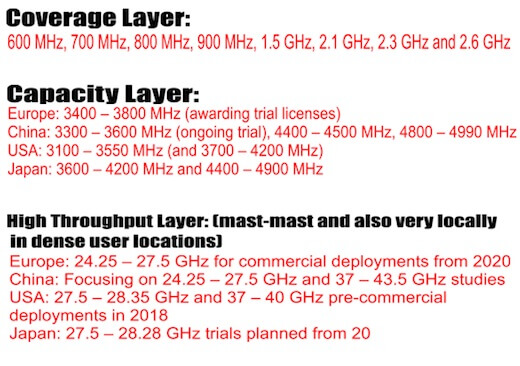
5G offers mind-blowing data capabilities, practically unrestricted call volumes and near infinite data broadcast. It does this by 5G using largely untapped bandwidth of the millimeter wave (MMW), which is between 30GHz and 300GHz, as well as some lower and mid-range frequencies….

….. Thousands of studies link low-level wireless radio frequency radiation exposures to a long list of adverse biological effects, including:

  • DNA single and double strand breaks
  • oxidative damage
  • disruption of cell metabolism
  • increased blood brain barrier permeability
  • melatonin reduction
  • disruption to brain glucose metabolism
  • generation of stress proteins

Let’s not also forget that in 2011 the World Health Organization(WHO) classified radio frequency radiation as a possible 2B carcinogen.

More recently the $25 million National Toxicology Program concluded that radio frequency radiation of the type currently used by cell phones can cause cancer.

But where does 5G fit into all this? Given that 5G is set to utilize frequencies above and below existing frequency bands 5G sits in the middle of all this. But the tendency (it varies from country to country) is for 5G to utilize the higher frequency bands. Which brings it’s own particular concerns. Here is my review of the studies done to date – 11 reasons to be concerned…. 

#1 – A DENSER SOUP OF ELECTROSMOG

We’re going to be bombarded by really high frequencies at low, short-range intensities creating a yet more complicated denser soup of electrosmog – as this diagram shows.

To work with the higher range MMW in 5G, the antennas required are smaller. Some experts are talking about as small as 3mm by 3mm. The low intensity is for efficiency and to deal with signal disruption from natural and man-made obstacles.

#2 – EFFECTS ON THE SKIN

The biggest concern is how these new wavelengths will affect the skin. The human body has between two million to four million sweat ducts. Dr. Ben-Ishai of Hebrew University, Israel explains that our sweat ducts act like “an array of helical antennas when exposed to these wavelengths,” meaning that we become more conductive. A recent New York study which experimented with 60GHz waves stated that “the analyses of penetration depth show that more than 90% of the transmitted power is absorbed in the epidermis and dermis layer.

The effects of MMWs as studied by Dr. Yael Stein of Hebrew University is said to also cause humans physical pain as our nociceptors flare up in recognition of the wave as a damaging stimuli. So we’re looking at possibilities of many skin diseases and cancer as well as physical pain to our skin.

#3 – EFFECTS ON THE EYES

A 1994 study found that low level millimeter microwave radiation produced lens opacity in rats, which is linked to the production of cataracts.

An experiment conducted by the Medical Research Institute of Kanazawa Medical University found that 60GHz “millimeter-wave antennas can cause thermal injuries of varying types of levels. The thermal effects induced by millimeterwaves can apparently penetrate below the surface of the eye.

A 2003 Chinese study has also found damage to the lens epithelial cells of rabbits after 8 hours of exposure to microwave radiation and a 2009 study conducted by the College of Physicians and Surgeons in Pakistan conclude that EMFs emitted by a mobile phone cause derangement of chicken embryo retinal differentiation.

#4 – EFFECTS ON THE HEART

A 1992 Russian study found that frequencies in the range 53-78GHz (that which 5G proposes to use) impacted the heart rate variability (an indicator of stress) in rats. Another Russian study on frogs who’s skin was exposed to MMWs found heart rate changes (arrhythmias).

#5 – IMMUNE SYSTEM EFFECTS

A 2002 Russian study examined the effects of 42HGz microwave radiation exposure on the blood of healthy mice. It was concluded that “the whole-body exposure of healthy mice to low-intensity EHF EMR has a profound effect on the indices of nonspecific immunity”.

#6 – EFFECTS ON CELL GROWTH RATES

A 2016 Armenian study observed MMWs at low intensity, mirroring the future environment brought about by 5G. Their study conducted on E-coli and other bacteria stated that the waves had depressed their growth as well as “changing properties and activity” of the cells. The concern is that it would do the same to human cells.

#7 – EFFECTS ON BACTERIA RESISTANCE

The very same Armenian study also suggested that MMWs effects are mainly on water, cell plasma membrane and genome too. They had found that MMW’s interaction with bacteria altered their sensitivity to “different biologically active chemicals, including antibiotics.” More specifically, the combination of MMW and antibiotics showed that it may be leading to antibiotic resistance in bacteria.

This groundbreaking finding could have a magnum effect on the health of human beings as the bandwidth is rolled out nationwide. The concern is that we develop a lower resistance to bacteria as our cells become more vulnerable – and we become more vulnerable.

#8 – EFFECTS ON PLANT HEALTH

One of the features of 5G is that the MMW is particularly susceptible to being absorbed by plants and rain. Humans and animals alike consume plants as a food source. The effects MMW has on plants could leave us with food that’s not safe to consume.

Think GMOs on steroids. The water that falls from the sky onto these plants will also be irradiated. A 2010 study on aspen seedlings showed that the exposure to radio frequencies led to the leaves showing necrosis symptoms.

5g radiation effect on plants

Another Armenian study found that MMWs of low intensity “invoke(s) peroxidase isoenzyme spectrum changes of wheat shoots.” Peroxidase is a stress protein existing in plants. Indications are that 5G will be particularly harmful to plants – perhaps more so than to humans.

#9 – EFFECTS ON THE ATMOSPHERE AND DEPLETION OF FOSSIL FUELS

Implementation of the 5G global wireless network requires the launching of rockets to deploy satellites for 5G. These satellites have a short lifespan which would require a lot more deployment than what we’re currently seeing. A new type of hydrocarbon rocket engine expected to power a fleet of suborbital rockets would emit black carbon which “could cause potentially significant changes in the global atmospheric circulation and distributions of ozone and temperature” according to a 2010 Californian study. Solid state rocket exhaust contains chlorine which also destroys the ozone.

The effects on the ozone are thought to be worse than current day CFC exposure.

Google’s Project Loon is said to bring Internet to rural and hard-to-access areas by using helium balloons. But these balloons only have a 10-month lifespan. We’re looking at a lot of helium being used here, more than what we can possibly have on Earth?

#10 – DISRUPTION OF THE NATURAL ECOSYSTEM

Since the year 2000, there have been reports of birds abandoning their nests as well as health issues like “plumage deterioration, locomotion problems, reduced survivorship and death,” says researcher Alfonso Balmori. Bird species that are affected by these low levels, non-ionizing microwave radiation are the House Sparrows, Rock Doves, White Storks, Collared Doves and Magpies, among others.

But it’s not just the birds. The declining bee population is also said to be linked to this non-ionizing EMF radiation. It reduces the egg-laying abilities of the queen leading to a decline in colony strength.

A study conducted by Chennai’s Loyola College in 2012 concluded that out of 919 research studies carried out on birds, plants, bees and other animals and humans, 593 of them showed impacts from RF-EMF radiations. 5G will be adding to the effects of this electrosmog.

#11 – MOST 5G STUDIES MIS-LEADING

5G will use pulsed millimeter waves to carry information. But as Dr. Joel Moskowitz points out, most 5G studies are misleading because they do not pulse the waves. This is important because research on microwaves already tells us how pulsed waves have more profound biological effects on our body compared to non-pulsed waves. Previous studies, for instance, show how pulse rates of the frequencies led to gene toxicity and DNA strand breaks.

Continued/….  READ LLOYD BURRELL’S FULL ARTICLE HERE

FOR MORE INFORMATION ON 5G SEE HERE

Posted in Uncategorized | Comments Off on 5G RADIATION DANGERS – 11 REASONS TO BE CONCERNED

April 2017 – Cell phone and cordless phone use causes brain cancer: New review

13 April 2017      Source Article –  Electromagnetic Radiation Safety

Evaluation of Mobile Phone and Cordless Phone Use and Glioma Risk
Using the Bradford Hill Viewpoints from 1965 on Association or Causation

“The nine Bradford Hill viewpoints on association or causation regarding RF radiation and glioma risk
seem to be fulfilled in this review.
Based on that we conclude that glioma is caused by RF radiation. Revision of current guidelines
for exposure to RF radiation is needed.”

This review paper by Michael Carlberg and Lennart Hardell evaluates the strength of the scientific evidence to determine whether there is a causal relationship between a risk factor and an associated disease — namely, wireless (cellphone and cordless) phone use and glioma, the most common brain cancer. The paper applies the nine perspectives developed by Sir Austin Bradford Hill to the peer-reviewed data pertaining to this health risk.

The authors allege that official bodies that have reviewed the evidence on mobile phone use and health risks have been dominated by individuals with conflicts of interest. Moreover, these reviewers have relied upon data from methodologically unsound studies, including the Danish Cohort Study and a UK cohort study, to dismiss the evidence from case-control studies.

Drawing upon several lines of research, the authors present a compelling argument for their conclusion that glioma is caused by radio frequency (RF) radiation. The paper recommends that the current guidelines for RF exposure must be revised to protect the population from exposure to low-intensity, non-thermal levels of radio frequency radiation.

Carlberg M, Hardell L. Evaluation of Mobile Phone and Cordless Phone Use and Glioma Risk Using the Bradford Hill Viewpoints from 1965 on Association or Causation. Biomed Research International. 2017;2017:9218486. doi: 10.1155/2017/9218486. Epub 2017 Mar 16.

Abstract

Objective. Bradford Hill’s viewpoints from 1965 on association or causation were used on glioma risk and use of mobile or cordless phones.

Methods. All nine viewpoints were evaluated based on epidemiology and laboratory studies.

Results. Strength: meta-analysis of case-control studies gave odds ratio (OR) = 1.90, 95% confidence interval (CI) = 1.31-2.76 with highest cumulative exposure.

Consistency: the risk increased with latency, meta-analysis gave in the 10+ years’ latency group OR = 1.62, 95% CI = 1.20-2.19.

Specificity: increased risk for glioma was in the temporal lobe. Using meningioma cases as comparison group still increased the risk.

Temporality: highest risk was in the 20+ years’ latency group, OR = 2.01, 95% CI =1.41-2.88, for wireless phones.

Biological gradient: cumulative use of wireless phones increased the risk.

Plausibility: animal studies showed an increased incidence of glioma and malignant schwannoma in rats exposed to radiofrequency (RF) radiation. There is increased production of reactive oxygen species (ROS) from RF radiation.

Coherence: there is a change in the natural history of glioma and increasing incidence.

Experiment: antioxidants reduced ROS production from RF radiation.

Analogy: there is an increased risk in subjects exposed to extremely low-frequency electromagnetic fields.

Conclusion. RF radiation should be regarded as a human carcinogen causing glioma.

Abstract for open access paper: http://bit.ly/2p1ovBU

Read Full Report HERE

Posted in Uncategorized | Comments Off on April 2017 – Cell phone and cordless phone use causes brain cancer: New review

April 2017 – Italian court rules mobile phone use caused brain tumour

21 April 2017

Source Article : The Guardian

Court awards pension to employee who claimed work-related use of a mobile led to him developing a benign tumour

An Italian court has ruled that excessive, work-related use of a mobile phone caused an executive to develop a benign brain tumour.

In what could become a landmark ruling, the court in the northern town of Ivrea awarded the plaintiff a state-funded pension.

The judgment, which was handed own on 11 April but only made public on Thursday, is subject to a possible appeal.

Roberto Romeo, 57, had testified that his work duties obliged him to use his mobile for three to four hours of each working day for 15 years.

“For the first time in the world, a court has recognised a causal link between inappropriate use of a mobile phone and a brain tumour,” his lawyers, Stefano Bertone and Renato Ambrosio said in a statement.

Read Full Article HERE 

Reported Also

http://www.news.com.au/technology/gadgets/mobile-phones/landmark-case-ruled-excessive-workrelated-use-of-a-phone-caused-brain-tumour/news-story/c1c767e0f88ef2473be2f6b5d9500af2

http://www.washingtontimes.com/news/2017/apr/20/italian-court-finds-link-between-cell-phone-use-an/

https://www.telecompaper.com/news/italian-court-rules-workers-tumour-caused-by-mobile-use–1193032

https://www.thesun.ie/living/892857/italian-court-rules-mans-brain-tumour-was-caused-by-using-his-mobile-phone-for-work/

http://hosted.ap.org/dynamic/stories/E/EU_ITALY_CELL_PHONE_TUMOR?SITE=AP&SECTION=HOME&TEMPLATE=DEFAULT&CTIME=2017-04-20-14-24-32

http://www.lapresse.ca/sciences/medecine/201704/20/01-5090153-tumeur-au-cerveau-et-cellulaire-un-tribunal-italien-donne-raison-a-un-malade.php

http://torino.repubblica.it/cronaca/2017/04/20/news/ivrea_tumore_al_cervello_per_uso_eccessivo_del_telefonino_inail_condannata_a_pagare_e_la_prima_volta-163447227/

https://www.thelocal.it/20170421/mobile-phone-use-can-cause-tumours-italian-court-rules

Posted in Uncategorized | Comments Off on April 2017 – Italian court rules mobile phone use caused brain tumour

April 2017- Smart Meters and Cell Damage from Pulsed EM Radiation – Our Health at Risk? – The Ecologist

Source Article – THE ECOLOGIST 

by Lynne Wycherley

11th April 2017

‘Smart meters’ looked like a great idea, writes Lynne Wycherley, giving us more control over our energy use. The downside? They emit as many as 14,000 short bursts of intense microwave radiation a day, disrupting cellular electrochemistry and causing health symptoms from migraine to tinnitus, insomnia, dizziness, anxiety, chest pain, palpitations and memory loss. Now a growing number of ‘electro-sensitives’ have had enough!
Smart meters’ should be abolished because they use short high-intensity pulses of microwave radiation. We know from the nanosecond studies these can be very damaging with calcium channel activation continuing long after the pulse has ceased.

As early as 2012, environmental health Professor David Carpenter, founder of Albany School of Public Health, and author of 370 peer-reviewed publications, issued a public letter on the plausible toxic risks of intensive, pulsed-microwave smart metering.

His letter Smart-meters: Correcting the Gross Misinformation was rapidly signed by 50 international health experts.

“We, the undersigned … have co-authored hundreds of peer-reviewed studies on the health effects of electromagnetic fields (EMFs) … Mass deployment of smart grids could expose large chunks of the general population to alarming risk scenarios ..

“More than a thousand studies done on low intensity, high frequency, non-ionizing radiation going back at least fifty years, show … biochemical changes which … may lead to diseases.”

Noting, among other risks, the free-radical / cellular / genetic harm recorded in many recent papers on wireless exposure – and the relative potency of smart-meters’ pulses – he adds: “Prolonged exposure … may eventually lead to cellular malfunction … With both cell towers and smart meters, the entire body is immersed by microwaves.”

Though his letter needs updating (see Belpomme, for example, below) he and his signatories are correct in signalling that all of us in the Green movement – activists, politicians, energy suppliers, families – have been given a sanitised version of long-term EMF health risks, including from high-density smart metering. At worst, equivalent to Big Tobacco’s “smoke it baby! there are no risks!”

The International Appeal to the United Nations

Though there is no world consensus on the degree of risk arising from pulsed-microwave pollution (RF-EMFs), it is salutary that most independent EMF scientists are voicing caution. And their numbers are rising rapidly.

In an unprecedented step, 190 precautionary scientists launched an appeal to the United Nations (2015, ongoing) to seek progressive, healthy alternatives to high-SARS phones / tablets and the piercing pulsed microwaves from smart meters, plus similar rollouts.

“Now is the time to ask serious questions about this emerging environmental health crisis”, their video warns, before offering some strong medicine:

“We have created something that is harming us and it is getting out of control! … Wireless utility meters, and cell towers, are blanketing our neighborhoods with radiation… BIOLOGICAL facts are being ignored … International standard setting bodies are not acting to protect the public’s health.” [Emphasis as per the published transcript]

In its call for cleaner, safer, ways forward, the International EMF Scientist Appeal is undeniably ‘Green’. Yet how many of us are fully aware of its call? Today, it carries 224 signatories from 41 nations; all have peer-reviewed research in the field, and none – to their credit – have been cowed or co-opted by the multi-billion dollar Big Telecoms industry: a colossus whose turnover has begun to rival that of fossil fuels.

Standard-setting bodies with documented conflicts of interests, meanwhile, continue to stifle reform – not least in the UK: see the shocking exposé of AGNIR, for example, by UK neuroscientist Dr Sarah Starkey. Plus French documentary Microwaves, Science & Lies, and the recent letter of no confidence in the EMF wing of the World Health Organisation.

People testifying to harm

Within months of PG&E’s (Pacific Gas & Electric) Californian smart-meter rollout, over 2,000 health complaints were filed. Harsh headaches, dizziness, tachycardia, insomnia, tinnitus; in desperation, some householders fled their homes, while others slept in their cars.

Let’s not forget that PG&E is the energy giant first exposed by Erin Brockovich for dumping hexavalent chromium.

As wave after wave of people have attested to similar problems from US and Canadian rollouts – many testifying to no prior inkling of smart-meter problems (as here /here) – court cases have arisen. Biophysics professor Andrew Marino, an authority on physiological reactions to ‘weak’ EMFs, gave lengthy evidence in defence of impacted residents.

Eviscerating outdated exposure standards, he concluded “coercing the complainants to endure… such exposure … amount[s] to involuntary human experimentation.” In addition health risks from “the type of electromagnetic energy emitted from smart meters … are heightened in the very young, the very old, and in those with pre-existing diseases and disorders.”

Case histories, echoing others around the world, include, for example, 84-year old Dr Georgetta Livingstone (Michigan). When her meter was fitted, she was hit by unexpected sharp pains in her body, headaches, violent head-to-toe rashes, insomnia, intense itching, depression and anxiety. With no remission, it seems, until her meter was finally removed. (Notice Professor O Johansson: skin reactions to EMFs). Such testimonies, however contested, may offer us helpful clues.

IT professionals are among those testifying to impacts. Silicon Valley consultant Jeromy Johnson (see his TED talk) and his wife, a GP, were axed by headaches, insomnia, and palpitations.

In Smart meters, the opposite of green, hosted by Green editor Rob Sidon, Johnson notes that if we connect everything wirelessly to smart meters we risk “filling our homes, our children, and ourselves” with RF microwaves emerging as subtly bioactive. (See, e.g., harm to insects from all ‘weak’ sources tested: Margaritis et al 2013). “How can a technology be considered sustainable if its byproduct harms not only humans but plants, insects and animals?”

Problems have also emerged in Australia, and beyond. In her peer-reviewed paper, Dr Federica Lamech, GP (Victoria), shares 92 in-depth patient case histories. Smart meters, it seems, were ‘the last straw’ in wireless exposure, tipping them into full-blown electrosensitivity – a syndrome now hallmarked, it seems, by toxic and inflammatory biomarkers, and impaired brain blood-flow (Belpomme 2015-2016: nearly 700 lab-verified cases, Paris).

Lamech herself was stricken “with palpitations, chest pain, insomnia, dizziness, inability to concentrate, memory loss and fainting spells. I [later] found out it was [when] the smart meters were remotely turned on.”

Professor Dariusz Leszczynski, biochemist, notes it is normal to have a bell-curve of responses to environmental toxins, and pulsed RF, his field, is no exception. If so, how can we, as Greens, find ways to support the human rights of adults / children at the ‘unlucky’ end of the spectrum?

Dr Isaac Jamieson, who advises the EU on bio-sustainability, analysed (1, 2,) how Big Energy smart-metering can infringe the Universal Declaration of Human Rights, especially birthright to health.

Eyes on stalks: the corporate hijack of smart-metering

According to multi-award-winning health documentary Take Back Your Power, Big Energy may have hidden drivers for smart-metering. Filmed in Canada and the USA, this deeply humanitarian film, best seen in full [here], reveals how Green aims can sadly become co-opted and perverted. In a race “to monetise the data”, a focus on the bottom line is sweeping injured families aside.

Director Josh del Sol told me, based on his long research, “with more than 5,000 technology patents muffled by the USPTA … new, decentralized, clean energy technologies are in fact being artificially-blocked from market proliferation.” TNCs “are hijacking the good intentions of environmentalists everywhere … with a profit potential (for them) in the trillions.”

Notice, for example, this big-client marketing by Onzo (2017): “We take data from smart meters… and build a highly personalized profile for each and every utility customer. We then tag this profile with key behavioural, attitudinal and lifestyle characteristics … We even tag appliances that we see being used in the home. .. giving [you] the ability to monetise [your] customer data by providing a direct link to appropriate third party organisations.”

Hidden risks to our cells

Dr Dietrich Klinghardt and team (New Jersey) found striking increases in toxic, inflammatory markers in patients’ blood samples – and their asymptomatic spouses – after smart-meter installation. Naturally, this needs wider testing, controlling for any confounding factors, but might there be wider risks, however subtle, at a cellular level?

Professor Martin Pall, a biochemist with 8 international awards, clearly thinks so. In 2013, he won a Global Medical Discovery listing for his landmark paper on a master mechanism of harm from wireless pulsed microwaves: watch his gripping, short talk. Supported by many peer-reviewed papers, it helps to explain the damage (nitrosative / oxidative) to organs and DNA seen in many new studies on WiFi and similar sources.

It’s striking that Pall singles out smart metering. “‘Smart meters’ should be abolished because they use short high-intensity pulses of microwave radiation. We know from the nanosecond studies these can be very damaging and act via VGCC [calcium channel] activation [his research] with activation continuing long after the pulse has ceased … It has been known for over 30 years that short microwave pulses can cause massive cellular damage.” See also his review of pulsed-microwave neurological risks, including from wireless smart meters (2015).

Disturbing toxic ‘window effects’ have been found at low wireless intensities: co-tumour promotion, for example, from levels comparable to tablets’ (Professor Lerchl 2015). While peer-reviewed findings at far lower levels – a clue to life’s sensitivity – raise growing questions about microwave-dense ‘smart homes’ and corporate IoT.

A 2011 study, ‘Electromagnetic hypersensitivity: evidence for a novel neurological syndrome described by DE McCarty et al in the International Journal of Neurosciencesconcluded that “EMF hypersensitivity can occur as a bona fide environmentally inducible neurological syndrome.”

The single subject was a self-diagnosed EMF sensitive exposed to a 60Hz field of 300V/m in a “double-blinded EMF provocation procedure specifically designed to minimize unintentional sensory cues” who “developed temporal pain, headache, muscle twitching, and skipped heartbeats within 100 s after initiation of EMF exposure (p < .05)."

The authors continue: “The symptoms were caused primarily by field transitions (off-on, on-off) rather than the presence of the field, as assessed by comparing the frequency and severity of the effects of pulsed and continuous fields in relation to sham exposure. The subject had no conscious perception of the field as judged by her inability to report its presence more often than in the sham control.

“The subject demonstrated statistically reliable somatic reactions in response to exposure to subliminal EMFs under conditions that reasonably excluded a causative role for psychological processes.”

dustry influences on EMF research, regulation, and ‘spin’, as exposed in a remarkable new book (just published), Corporate Ties That Bind: An Examination of Corporate Manipulation and Vested Interests in Public Health.

But as we catch up with the latest cautioning science, we can begin to expose these dark trends, and the risks and pollution levels they feed. While laying bare the outworn paradigm (denial of all non-heating effects) to which TNCs and governments so scandalously cling.

And on balance, we could begin to initiate healing changes. For though it is challenging to discover that pulsed RF is emerging, by degrees, as subtly bioactive, our Green ethics, our courage, surely enables us to adapt.

Potential solutions, for social and technical visionaries, are legion. From the new, responsive data-over-grid technology, for example, that can manage energy without microwave smart meters. To cleaning up kilohertz EMFs (dirty electricity, also from solar inverters) including, perhaps, the subtly neuro-active frequencies.

To the deep carbon savings of simple energy bill comparison with neighbours, a growing trend. To lending families plug-in energy monitors, perhaps, an alternative to permanent pollution. To conserving wired resources while cleaner technologies evolve. To the inspiring possibilities of data-rich infrared and VLC (LiFi / visual light communication) – now found to have useful reflectivity – combined with fibre-optics … And so on.

Globally, the more we can integrate EMF precautionary science into our daily lives, low carbon strategies, and environmental health awareness, then the more bio-sensitive, and inspiringly fit for the future, we become. So hatching an overdue paradigm – Wings for a wiser world.


Lynne Wycherley is a nature poet with six published collections. Working in parallel with pioneering doctors, she has been investigating non-ionizing radiation for five years.

Notes

Professor Belpomme Scans revealed damaged blood-flow in limbic area of brain (a seat of Alzheimer’s); Belpomme flagged potential dementia risks. Follow-up brain scans, where taken, found improvements from sustained wireless reduction – not easy, in today’s environments.

Emerging testimonies (UK)

ES-UK health charity Confidential help-line is hearing from people testifying to problems

Other testimonies Although circumstantial, these examples give a flavour of the type of testimonies emerging around the world:

Anna, a freelance journalist/film-maker, told me she moved from London into a small block of flats, Bedford, in March 2012. A fit runner and gym-user on a super-healthy diet, she was bewildered by the onset of inexplicable illnesses that would persist until her departure 4 years later.

She was afflicted by a set of symptoms she had never experienced before: violent headaches, deep ‘brain fog’, exhaustion, neurological symptoms – “my nerves felt wired” – chest-tightness, buzzing tinnitus, repeated nausea / dizziness, leg jitters, a racing / irregular heartbeat, and poor sleep. All with no known allergen, or other salient stress.

Working from home, she struggled to continue. Eventually, weakened, she caught a serious neurological viral infection and later meningitis (also neurological: see Pall 2015, above). But to her surprise, on moving to a new flat with analogue meters, almost all of the four years’ symptoms vanished and did not return. What had been different about her previous flat?

One day, speaking to Southern Electricity, she discovered her previous electricity meter had been a smart meter, along with the others in the block. In her 4 years, she had not realised that the meter near to her bed, plus the 11 others crammed in the building (3 nearby) were wireless smart meters.

In her view, it all began to make sense: the “suicidal headaches”, fatigue, illnesses, and astonishing improvement on moving house to a smart-meter free area.

Cathy, a normally fit horse rider, also shared her experience with me. When her neighbours adopted a smart-meter (on a thin partition wall, 3/1/2017) she was hit with inexplicable harsh headaches, tachycardia, weakness, tinnitus, disorientation, blurred vision, ‘brain fog’, insomnia, irritability, fatigue, labile temperature, and high blood pressure – all new.

She had hoped it was a passing coincidence, but experienced no relief for weeks until 7 days lodging with a friend (no smart meter); her symptoms vanished, her sleep was restored. She returned home feeling optimistic but was felled by the same symptoms. Her neighbour eventually asked for the meter’s output to be deactivated; the suppliers said they would do so remotely.

When the harsh discomfort continued, a technician discovered only the in-house display was dormant: the meter was still emitting non-stop microwave pulses. The neighbour was reluctant to help further. She continues to struggle.

IT professional Steve Weller‘s public testimonial (Australia) submitted to regulators, is worth reading. A calm, alert, resumé of problems that began with close exposure to a WiFi router, he describes being woken nightly, as if “someone had [pushed] a long sharp needle into my head”, only to discover his neighbour had fitted two smart meters behind his bed.

Forced to retreat from rising work pollution to salvage his health, he does not know how he will support his family. His exposé of industry-favoured ‘tests’ that discredit people experiencing problems (page 8) is illuminating and echoes many points by cautioning scientists. (Also notice physics professor James McCaughan, who was impacted by wireless devices, and has to work in a Faraday Cage).

Compliance. Public Health England’s exposure assessments of smart meters are based on the unreformed ‘safety standards’, already described, based only on thermal injury. It cites AGNIR and ICNIRP, both under fire for conflicts of interest, nepotism, and stifling reform.

For contrast see, e.g., physicist Dr Ron Powells cautious assessment: he notes that even ZigBee exceeds levels at which bio-effects have been recorded. Since the US National Toxicology Programme’s cancer findings in RF-exposed mice (see Paul Mobbs) – scientists’ calls for pulsed RF to be upgraded to a class 1 or 2A carcinogen have increased. After classifying pulsed microwaves as a 2B carcinogen in 2011, IARC clarified that this applied to all wireless sources.

Images in case helpful:

Smart meter health refugees: Vic & Rosemary Trudeau (Melbourne)

testified to nausea, chest pain and insomnia after smart-meter installation c. Herald Sun

A tree in Berkeley by a newly installed bank of PG&E smart meters (top) and 20 days later (below) despite ‘ample rain’ c. Berkeley residents.

READ FULL ARTICLE HERE

Posted in Uncategorized | Comments Off on April 2017- Smart Meters and Cell Damage from Pulsed EM Radiation – Our Health at Risk? – The Ecologist

The Internet Of Things Poses Human Health Risks: Scientists Question The Safety Of Untested 5G Technology At International Conference

Source Article: Environmental Health Trust 

Replicated research shows that Millimeter waves – used by the Department of Defense in crowd control weapons – interacts with human skin and eyes.

Israeli research studies presented at an international conference reveal that the same electromagnetic frequencies used for crowd control weapons form the foundation of the latest network – branded as 5G – that will tie together more than 50 billion devices as part of the Internet of Things. Current investigations of wireless frequencies in the millimeter and submillimeter range confirm that these waves interact directly with human skin, specifically the sweat glands. Dr. Ben-Ishai of the Department of Physics, Hebrew University, Israel recently detailed how human sweat ducts act like an array of helical antennas when exposed to these wavelengths. Scientists cautioned that before rolling out 5G technologies that use these frequencies, research on human health effects needed to be done first to ensure the public and environment are protected.

“If you are one of the millions who seek faster downloads of movies, games and virtual pornography, a solution is at hand, that is, if you do not mind volunteering your living body in a giant uncontrolled experiment on the human population. At this moment, residents of the Washington, DC region – like those of 100 Chinese cities – are about to be living within a vast experimental Millimeter wave network to which they have not consented – all courtesy of American taxpayers,” stated Dr. Devra Davis, President of the Environmental Health Trust. Davis proposed that the Trump Administration could provide funds for research and training by implementing a 2 cents per month fee on all wireless devices, their manufacturers and network providers. “Training and research in bioelectromagnetics including the evaluation of new technologies is essential before universal deployment”….

CONTINUE READING AT EHTrust.org

Posted in Uncategorized | Comments Off on The Internet Of Things Poses Human Health Risks: Scientists Question The Safety Of Untested 5G Technology At International Conference

Electromagnetic Radiation – The Modern Dilemma – Anthony Hughes B.Sc, Dip.Chem.Eng., Dip. Stats. & O.R.,

Electromagnetic Radiation – The Modern Dilemma

A review of the history, hidden dangers, untested technologies and alternative solutions

tony hughes

Written and Compiled by  Anthony Hughes
B.Sc, Dip.Chem.Eng.,
Dip. Stats. & O.R.,
Licentiate in Traditional Chinese Medicine
Clinical Certificate (Nanjing) China

This is important for all of us, especially our children and the future generations.

This review on the unrecognised and hidden dangers to health of WiFi, mobile phones and contaminated electricity is lengthy and detailed, due to the manifold aspects of this technology.

I urge everybody to at least read the summary, and hopefully it will encourage you to read more, after your  curiosity and instinct for self preservation and health is aroused. See also the preface on page three.

I encourage everybody to distribute this review to others, and, if you have any comments on any aspect of the document, I would welcome it.

If you would like to have regular news updates on this topic, I suggest that you inform Mr John Weigel (jweigel0@gmail.com) and he will include you in his mailing list.

Anthony Hughes
Posted in Uncategorized | Comments Off on Electromagnetic Radiation – The Modern Dilemma – Anthony Hughes B.Sc, Dip.Chem.Eng., Dip. Stats. & O.R.,

“Electrosensitivity – an Environmental Illness, an Authentic Diagnosis, not a Delusional Disorder” – Dr Andrew Tresidder’s letter to Medical Colleagues

March 2017

From :

Dr Andrew Tresidder MBBS MRCGP (1989) Cert Med Ed, Section 12 Approved Doctor

To my Medical Colleagues, GPs, Psychiatrists, Neurologist and others:

OPEN LETTER HERE – Important information to download and share with your doctor/consultant/health professional etc

Posted in Uncategorized | Comments Off on “Electrosensitivity – an Environmental Illness, an Authentic Diagnosis, not a Delusional Disorder” – Dr Andrew Tresidder’s letter to Medical Colleagues