Press Release: NEW YORK, Nov. 1, 2023 /PRNewswire/
An international group of leading lawyers, physicians, physicists, epidemiologists and other children’s health experts have today announced their support for a new International Declaration intended to raise public awareness of three fundamental rights of children which are not adequately being protected: the right to be free from addictive platforms and apps; the right to be free from hazardous radiation from wireless devices; and the right to be free from commercial exploitation of private information.
PLEASE add your name as a concerned parent, grandparent, teacher, individual or organisation, and share with to others. The signed declaration will be presented to the United Nations on World Children’s Day, 20th November 2023.
In 2017 an article was published on the unwillingness of the WHO to acknowledge the health effects associated with the use of wireless phones. It was thus stated that the WHO is ‘A Hard Nut to Crack’. Since then, there has been no progress, and history seems to be repeating in that the European Union (EU) is following in the blind man’s footsteps created by the WHO. Despite increasing evidence of serious negative effects from radiofrequency radiation on human health and the environment, the EU has not acknowledged that there are any risks. Since September 2017, seven appeals by scientists and medical doctors have been sent to the EU requesting a halt to the roll-out of the fifth generation of wireless communication (5G). The millimeter waves (MMW) and complex waveforms of 5G contribute massively harmful additions to existing planetary electromagnetic pollution. Fundamental rights and EU primary law make it mandatory for the EU to protect the population, especially children, from all kinds of harmful health effects of wireless technology. However, several experts associated with the WHO and the EU have conflicts of interest due to their ties to industry. The subsequent prioritizing of economic interests is resulting in human and planetary health being compromised. Experts must make an unbiased evaluation with no conflicts of interest. The seven appeals to the EU have included requests for immediate protective action, which have been ignored. On the issue of wireless radiation and the health of citizens, the EU seems to be another hard nut to crack.
Introduction
The 5G appeal regarding the next generation for wireless communication [1] has been endorsed by 430 scientists and MDs [2] and sent to the EU seven times. These appeals have requested the EU to take appropriate measures to protect humans and the environment from the harmful effects of electromagnetic fields used for wireless communications (wireless EMF). The first appeal was sent in September 2017. The most recent 7th Appeal was sent to the EU January 12, 2023 [3]. Unfortunately, there has not been any positive response from the EU to this latest submission or any subsequent preventive measures put in place.
Politicians seem to have set their course for deployment of this technology, regardless of detrimental effects. In an email dated January 30, 2023 by Ralph Kuhne regarding the 7th Appeal and on behalf of Ms Stella Kyriakides, Commissioner for Health and Food Safety, it was stated that: We take note of your position on the International Commission on Non-Ionizing Radiation Protection (ICNIRP) and on the Scientific Committee on Health, Environmental and Emerging Risks – SCHEER (previously SCENHIR). However, we must recall that these bodies are well recognised at national and international level for their scientific excellence and independence from commercial, national, and vested interests. In the following sections of this paper we discuss the legal aspects of this reply, as well as the updated science on this issue.
EU decision-makers are mandated to protect the EU population, especially children, from all kinds of harmful health effects, including those from wireless technology. Such mandates are given in The European Convention of Human Rights [4], The Charter of Fundamental Rights [5], primary law [6] and case law from the European Court of Justice. Table 1 summarizes the main EU policies and statements that are being violated by the unfettered rollout of 5G, based on the blind adherence to ICNIRP guidelines….
“Dr Hillel Baldwin recounts how his wife became gravely ill over five years ago. Epidemiologist Samuel Milham referred the Arizona-based couple to a local expert in electromagnetic field (EMF) detection and mitigation, Paul Harding of Total EMF Solutions. His wife is much better since they rid their house of wireless devices emitting probably carcinogenic microwave radiation, but she is still electrohypersensitive today.
Dr. Baldwin is a Barrow Neurological Institute-trained surgeon and works closely with the Environmental Health Trust to help inform citizens, physicians and politicians of the dangers of EMFs. Based on numerous independent data-driven studies,r. Baldwin and many other scientists are convinced that this man-made radiation we use daily in homes, schools, businesses and even hospitals is partly responsible for the recent epidemic rise in the incidence of several central nervous system cancers, neurological diseases and neurodegenerative disorders.”
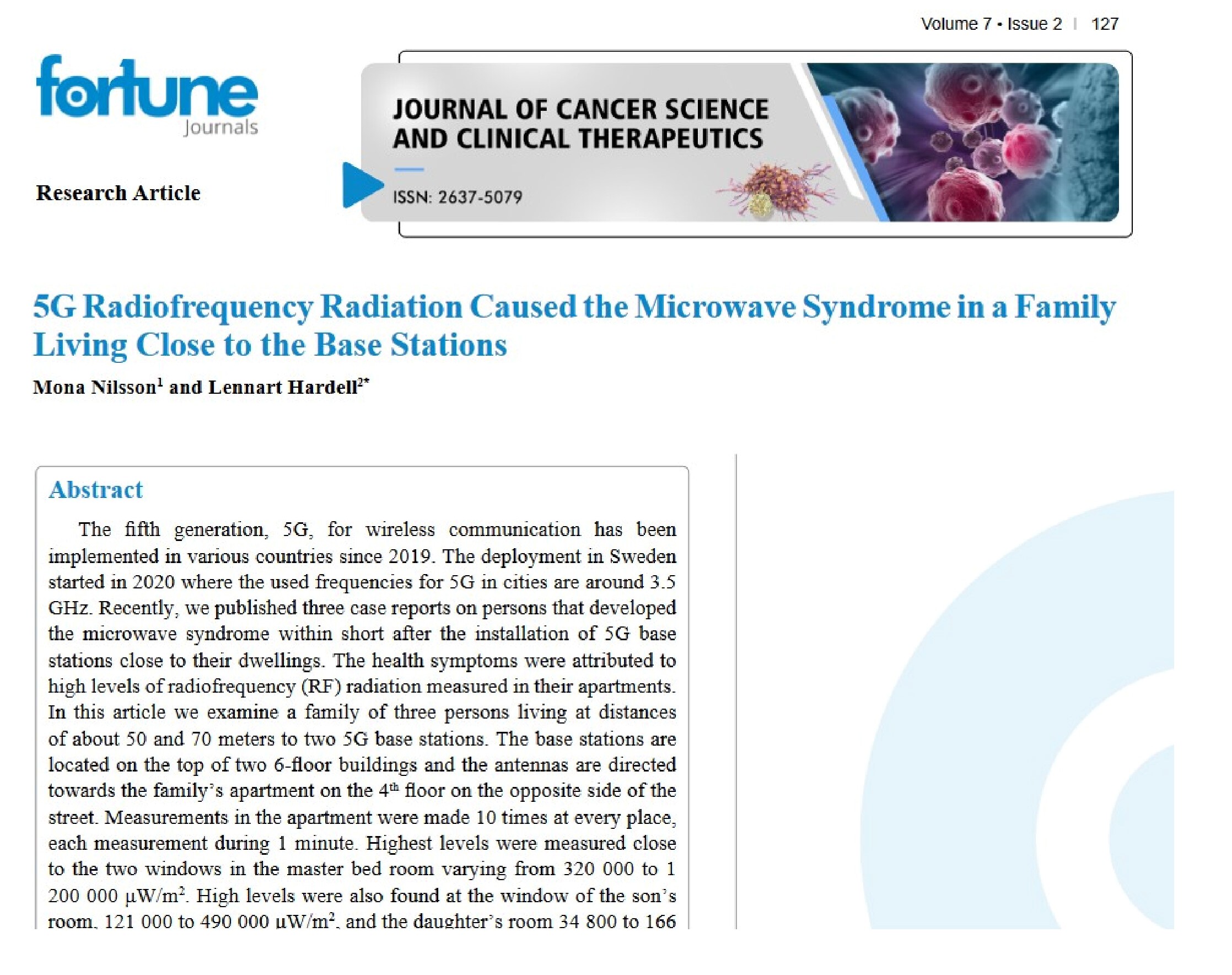
In the recently published case report “5G Radiofrequency Radiation Caused the Microwave Syndrome in a Family Living Close to the Base Stations” a family of three living at distances of about 50 and 70 meters to two base stations with 4G and 5G transmitters reported symptoms included in the microwave syndrome. The daughter had the most severe health issues, for example sleeping problems, headache, concentration and memory problems, skin disorders, irregular heartbeat, light sensitivity, anxiety and panic attacks.
In this article we present a new case study of a family including three persons, a woman 55 years, a 20 year old man and a 19 year old woman. The fourth family member, the father, did not participate. All live in an apartment with two 5G/4G base stations directed towards their apartment, one at a distance of around 50 meters and the second at a distance of around 70 meters. The base stations are placed on the roof of two adjacent 6-floor buildings. The apartment of the family is located at a slightly lower height, on the fourth floor, in another building across the street (Figure 1)
Base stations for 3G and 4G had previously been active at the same locations since at least 2013, but were replaced by 5G and 4G technology and antennas in the middle of July 2021 (B in Figure 1) and during the month of May 2022 (C in Figure 1).
The family members declared having several symptoms typical for the microwave syndrome and were most severe in the woman aged 19. In early September 2021 the young woman experienced worsened health symptoms with development of several of the reported symptoms. She had already before the deployment of the two 5G base stations some health problems in terms of sleep disturbances, pain in the body and the joints and occasionally high pulse rate. There are no measurements of the RF microwave radiation from the previous 3G/4G base stations situated at the same spots since at least 2013. The present 5G equipment was installed during July 2021 (B in Figure 1) and during May 2022 (C in Figure 1).
Although the levels in the daughter’s bedroom were lower than in the other family members’ bedrooms, she reported more health issues. However the levels measured at the pillow in her bedroom are far above the levels previously reported to increase risk of ill health in studies of persons living close to base stations [24], and the levels of maximum exposure recommended by the BioInitiative Report and the EuropaEM EMF Guidelines [25]. Further, it is known that the sensitivity to RF radiation can vary considerably among individuals.
The RF radiation levels measured in this study, and in our three previous case studies on this topic, were very much higher than levels in previous generations of wireless technology found to increase the risk of ill health such as symptoms of the microwave syndrome. The distance to the base stations is within the radius also previously reported to increase the risk of similar symptoms [24, 26-31]. The RF radiation levels are also far above levels recommended by experts. In 2012, the BioInitiative Report proposed to limit human exposure to 30-60 µW/m2 and even lower for sensitive persons and children, 3-6 µW/m2 [32]. Also the EuropaEM EMF guidelines proposed in 2016 to limit exposure to maximum 10 – 1000 µW/m2 and even lower at night time, 1-100 µW/m2 . For sensitive persons a maximum of 0.1-10 µW/m2 was recommended [33] ….
New Study re Trifolium Family: Hares Foot Clover (Trifolium Arvense) permanently and irreversibly damaged by effects of RF-EMF exposure.Is our Irish Shamrock (Trifolium Dubium) now threatened by Radiofrequency Electromagnetic Fields?
Do electromagnetic fields used in telecommunications affect wild plant species? A control impact study conducted in the field
Czerwiński M*, Vian A, Woodcock BA, Goliński P, Recuero Virto L, Januszkiewicz Ł.
Highlights
•Existing studies on RF-EMF effects focus on laboratory short-time exposed crop plants.
•We study 10 wild taxa under field conditions from seed germination to plant maturity.
•Inter-specific variation in RF-EMF effects on plant morphology was observed.
•The strongest RF-EMF effects occurred for Trifolium arvense.
•Future studies should focus on keystone Trifolium species in grassland ecosystems.
Abstract
Over the last three decades there has been an unprecedented increase in both the coverage of wireless communication networks and the resultant radiofrequency electromagnetic field (RF-EMF) exposure level. There is growing concern that this rapid environmental change may have unexpected consequences for living organisms. Existing research on plants has shown that RF-EMF radiation can affect their growth and development, gene expression and various metabolic activities. However, these findings are largely derived from short-time exposure of crop plants under laboratory conditions. It remains unclear to what extent plants are affected by artificial RF-EMFs in real ecosystems and what potential consequences this could have for ecosystems. This study attempts to assess these long-term effects of RF-EMF exposure on wild plants under controlled experimental field conditions. We investigated the impacts of RF-EMF exposure (866–868 MHz frequency band) from seed germination to maturation for ten common herbaceous plant species over a four-month period. The selected plant species belong to various families and have different functional and morphological traits that might affect a response to the applied RF-EMF.
For most of the considered species responses to RF-EMF were undetectable or weak, and where present restricted to a single trait. Only for one species, Trifolium arvense, were effects observed at different plant development stages and for different plant characteristics. In this species RF-EMF stimulated growth and probably influenced leaf heliotropic movements, as indicated by a larger height, larger leaf area and altered leaf orientation one month after germination. However, over the growing season Trifolium arvense plants exposed to RF-EMF entered the phase of senescence earlier, which was manifested through a reduction of green leaf area and an increase in the area of discolored leaf.
We conclude that the effects of RF-EMF exposure at environmentally relevant levels can be permanent and irreversible in plants growing in the open natural environment, however, these effects are restricted to specific species. This in turn suggests that future studies should examine whether the effects observed here occur also in more common Trifolium species or other legumes that are a keystone component within European grasslands. Our findings also show that Trifolium arvense could be a candidate indicator of man-made RF-EMFs in the environment. …
Posted inUncategorized|Comments Off on Do electromagnetic fields used in telecommunications affect wild plant species? A control impact study conducted in the field
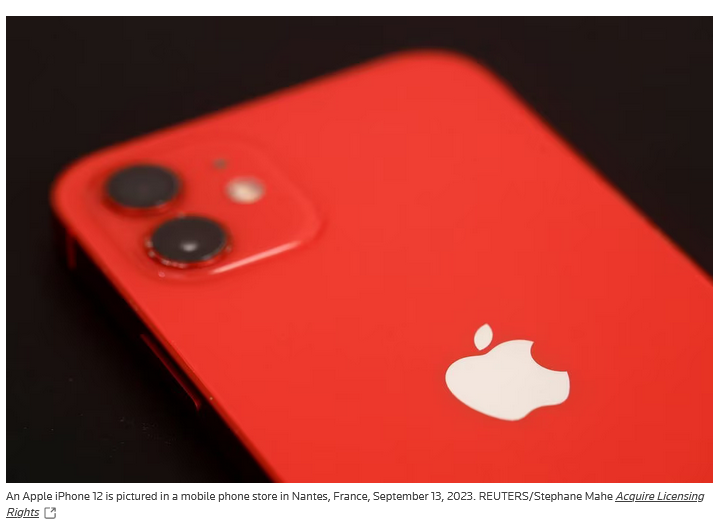
France’s radiation watchdog has banned sales of Apple’s (AAPL.O) iPhone 12 after tests that it said showed the smartphone breached European radiation exposure limits.
The Agence Nationale des Frequences (ANFR) said on Tuesday the model’s Specific Absorption Rate (SAR) – a measure of the rate of radiofrequency energy absorbed by the body from a piece of equipment – was higher than legally allowed.
There are now 43 models of cell phones, identified as dangerous to the health of users, which have been either withdrawn from the French market or have seen their Specific Absorption Rate (SAR) updated by software. The latest: the Iphone 12, the Motorola Edge, the Essential Clap 20+ (you have until June 30, 2023 to bring it back to Boulanger), the Xiaomi Poco X3 and the Logicom Le Swipe.
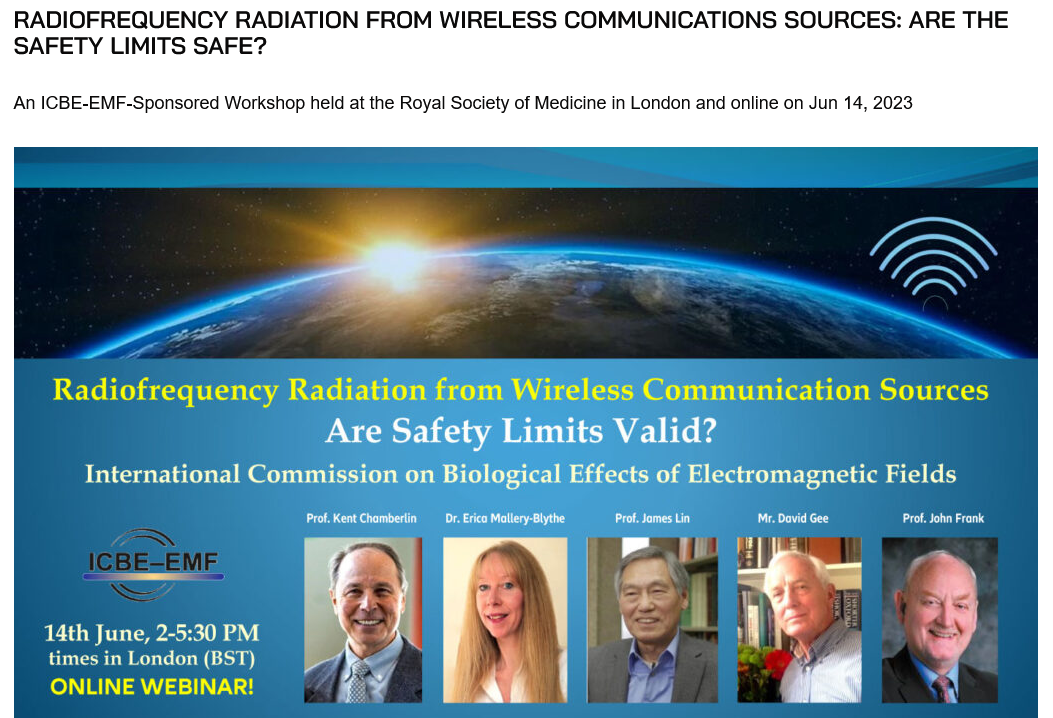
This webinar was hosted by the International Commission on the Biological Effects of Electromagnetic Fields and features some of the world’s leading experts on electromagnetic radiation.
Powerpoint presentation slides and synopses of each speaker’s presentation are available here:
Appeal of the Scientists for Electromagnetic Safety
To the Italian Government, to the Parliament, to the Regions and to the Autonomous Provinces
We – the undersigned biologists, physicists, chemists and doctors – have been conducting research on the effects of electromagnetic fields for decades and we have never used industry funds of telecommunications, proving that we have always worked in the exclusive interest of public health.
The news that the Government is considering the possibility of increasing the attention value by 6 V/m for the living areas where people stay more than 4 hours is the cause for great concern.
Our studies, and more generally international research in the latest twenty years, have largely demonstrated that exposure to radiofrequency, even below the current ICNIRP/WHO safety standards, can cause damage to health and it can reduce the levels of well-being in the general population.
Groups of scientists, such as ICEMS and Bioinitiative Working Group, such as the Council of Europe (Recommendation n° 1815 of 2011) have issued appeals to request the immediate reduction of the safety exposure limits to 0.6 V/m, in order to ensure public health and, in particular, to garantee the safety of the most vulnerable subjects such as children, pregnant women, the chronically ill patients, such as people with cancer and people with Electromagnetic Hyper Sensitivity (EHS)
Radiofrequency has been associated with several health problems including:
cancer (RF was classified by IARC as a “possibly carcinogenic for Man” in 2011, but subsequent studies concluded that radiofrequency falls within the parameters of Class 2A,1 that is to say “probable carcinogen”, and of Class 1 that is to say “certain carcinogen”);
neurodegenerative diseases, such as Alzheimer’s;
male and female infertility;
increased oxidative stress (related to many chronic diseases);
neurobehavioral changes in children born to mothers who used the mobile phone in pregnancy;
immune dysfunction;
alterations of insulin metabolism;
increased cerebral permeability and alterations of cerebral metabolism.
PROPOSED CHANGES TO NEW PLANNING BILL TO REMOVE EVEN MORE PUBLIC RIGHTS TO OPPOSE MONOPOLES/MASTS/ANTENNAS
Lobbying from Telecommunications Industry and IBEC
Licences for Telecommunications Infrastructure on Public Roads (footpaths & green spaces)
Section 254 licences are granted by Local Authorities for street furniture like signposts, hoardings, vending machines, tables and chairs outside cafés. Circa 2019, telecommunications mast/monopoles carrying antennae for 3G/4G/5G and accompanying cabinets were added to this list. A licence costs just €125.
These licence applications do not go through the usual planning process and are usually dealt with by the Roads and Municipal depts in the local authorities. Neither the telecommunications company nor councils are obliged to notify, consult or allow submissions from locals about proposed structures being erected in their localities.
Four councils only provide documents on their planning websites, but only one of those (Dublin City Council) allows public submissions. Other councils do not provide public notification, documentation, site notices or the right to object, and it can be difficult to get information from them. Some councils refuse to provide documentation or withhold documents even after a licence has been granted, the structure about to be installed, or mast and cabinet already in place.
In many cases, the public are unaware of a granted licence for a 4G/5G mast monopole until construction works start and a 15metre, 18metre or 20 metre high structure and cabinet is erected beside their homes, in their locality or beside their schools.
Section 254 licences applications for telecommunications appliances are not subject to Environmental Impact Assessments (EIA) to assess their possible effects on the environment.
Currently local authorities have 4 months to process and make a decision on a Section 254 telecommunications Licence. If a decision is not made within 4 months, then the application is considered granted, ie a ‘deemed decision to grant a licence’
Local authorities can refuse an application. Telecom companies can then appeal the decision to An Bord Pleanála, and if the public are aware, they can make an observation on that appeal within 4 weeks (cost to public is €50). Many of these refusals have been overturned by An Bord Pleanála.
Currently any person or group can also appeal the granting of a Section 254 licence and installation of a monopole. (cost to public is €220). Some people have lodged appeals against monopoles already erected and in other cases where they were made aware of proposed installation – and stopped works so far.
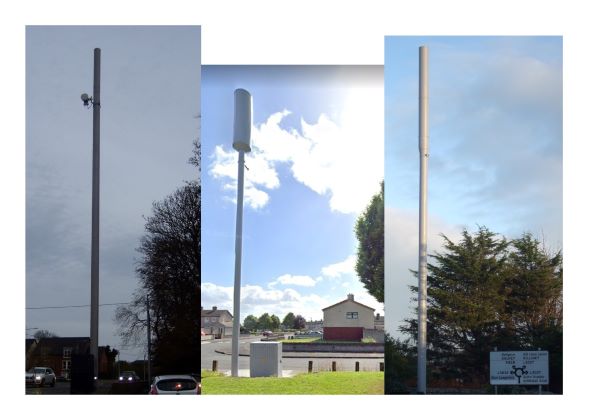
Image: Typical telecommunications monopoles being installed under Section 254 Licences. The ‘Compact Modular Tri-Sector Antennas’ are concealed in the top. One monopole can transmit 3G, 4G and 5G signals. They can be extended upwards with more antennas added to the top – ‘With its modular design, you can field-upgrade sectors and stack up to 4 operators on one pole, solving critical installation issues and speeding up 4G/5G deployments.’https://www.youtube.com/watch?v=wpRXd9OH5eQ
DRAFT PLANNING & DEVELOPMENT BILL – PROPOSED CHANGES
Section 10 of the draft Planning and Development bill to replace Section 254 and proposes the following in relation to licensing of telecommunications appliances and cables on public road:
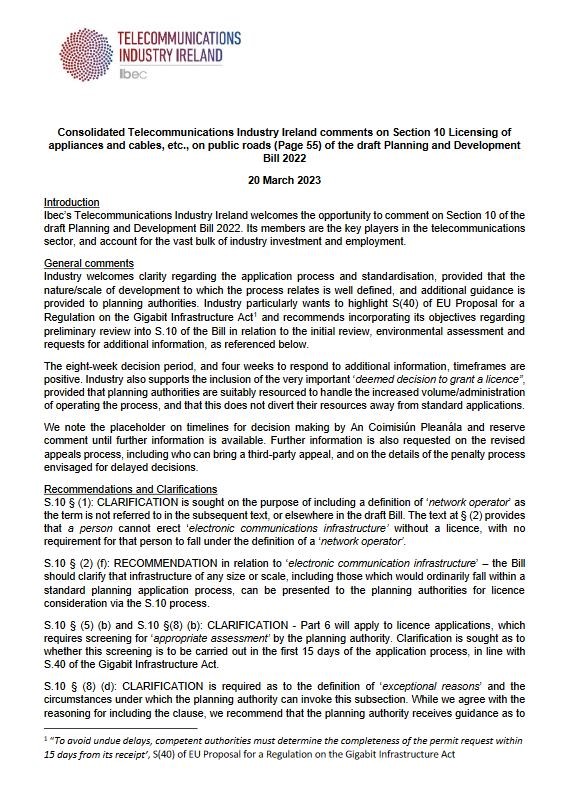
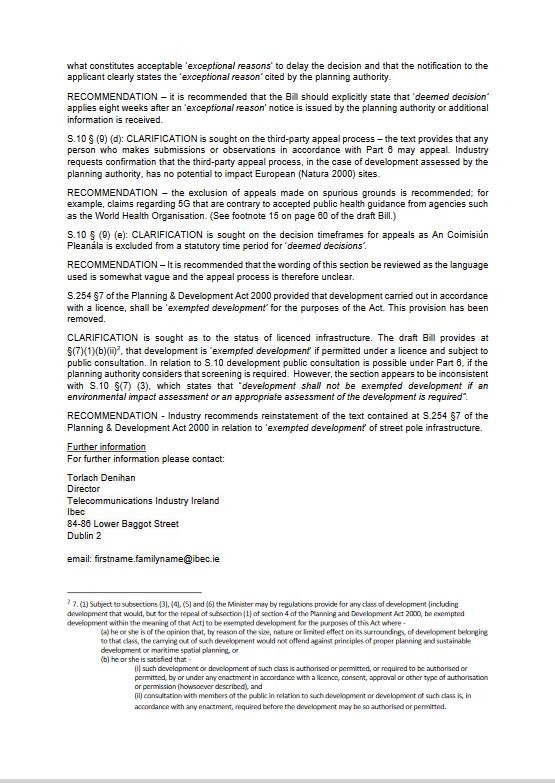
Removing the right for members of the public to appeal a decision, so fully removing any public consideration, consultation or opportunity to object. IBEC Telecommunications Industry Ireland recommends ‘the exclusion of appeals made on spurious grounds is recommended; for example, claims regarding 5G that are contrary to accepted public health guidance from agencies such as the World Health Organisation.’
Reducing local authorities’ decision making period from 4 months to 8 weeks, after which if the local authority has not made a decision, the application is deemed granted. No doubt the extra workload of having to process more telecom appliance applications in a shorter will result in the possibility of licences being deemed granted without proper process.
IBEC Telecommunications Industry Ireland also recommends that ‘the Bill should clarify that infrastructure of any size or scale, including those which would ordinarily fall within a standard planning application process, can be presented to the planning authorities for licence consideration via the S.10 process’
To date, only a few TDs and one Senator have raised the issue of Section 254s in the Dáil , with recent debate about the new Bill. A few more Councillors though have been voicing their concerns about this in the last few years.
Every one of our elected representatives should be questioning this whole process which already goes against the Aarhus Convention, and the proposed changes.
The removal of the right of appeal has been branded outrageous by planning solicitor Eoin Brady who said it “represents a blatant attack on democratic rights of public participation in environmental decision-making”. He said the amendment likely came “from lobbying from the telecoms industry”.
DRAFT PLANNING & DEVELOPMENT BILL – Section 10 Licensing of appliances and cables, etc., on public roads (Pages 55 – 62)




 Electromagnetic Sense Ireland